
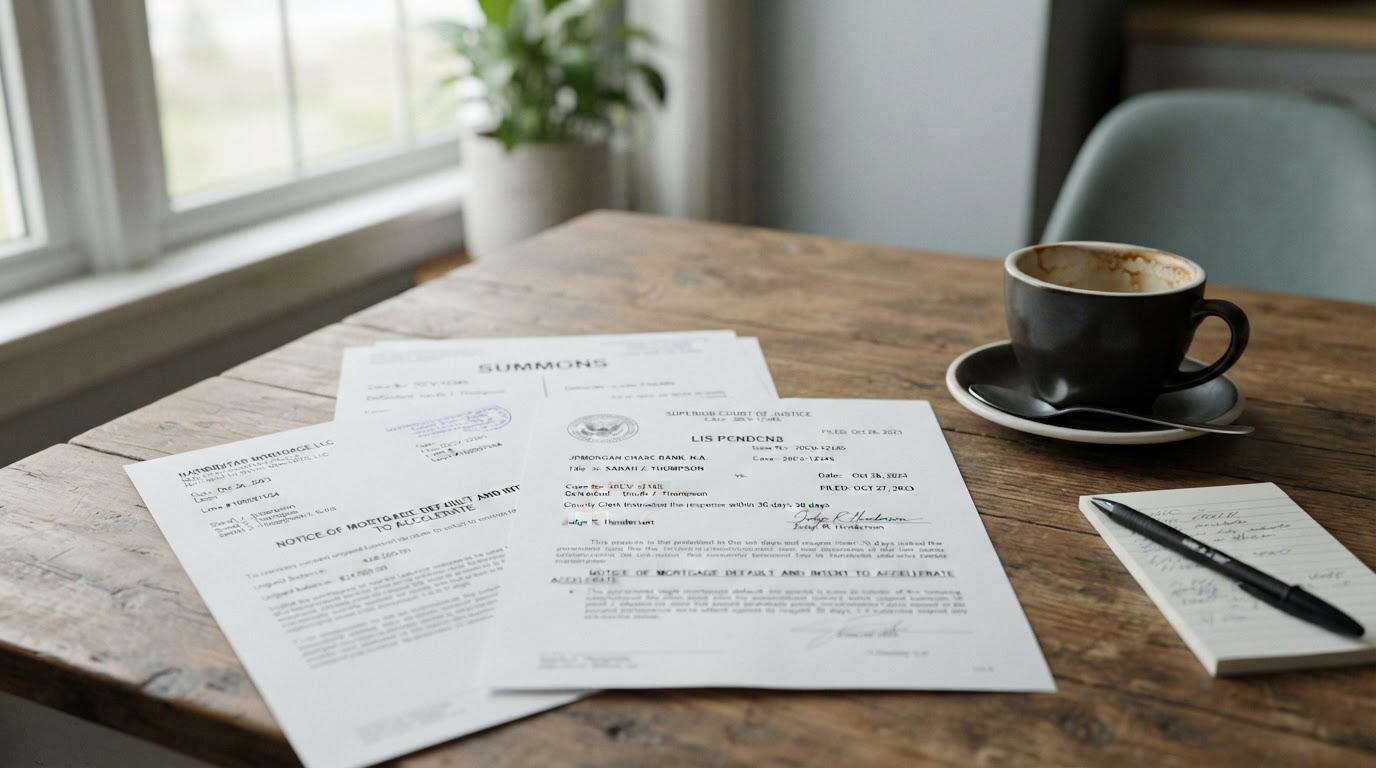
When you fall behind on mortgage payments, your lender and the courts begin sending official notices. These documents use legal language that can feel overwhelming, but each one carries a specific meaning and a specific deadline. Knowing which notice you received, and how much time you have to respond, can be the difference between keeping your options open and losing control of the outcome.
The Notices You May Receive, In Order
Foreclosure does not happen all at once. It follows a sequence of notices, each marking a new stage. Both New Jersey and Florida are judicial foreclosure states, meaning the lender must go through the court system to take your home. That gives you time, but only if you pay attention to the deadlines.
1. Missed Payment and Default Letters
The first notices come from your lender directly. A breach letter or notice of default tells you that you have missed payments and that the loan is in default. At this stage, no court case has been filed yet. This is the earliest and most flexible point in the process. You can often reinstate the loan by paying the past-due amount, request a loan modification, or begin planning a sale before any legal action starts.
2. Notice of Intention to Foreclose (New Jersey)
In New Jersey, before filing a lawsuit, most lenders must send a Notice of Intention to Foreclose. This letter informs you that the lender intends to begin court action and typically gives you 30 days to cure the default. It is not the lawsuit itself. If you receive one, you are still in the pre-foreclosure stage, and you have the most options available. Acting during this window, whether through loss mitigation or a sale, can prevent the case from ever reaching the courts. For a broader overview of this stage, see our pre-foreclosure guide.
3. The Foreclosure Complaint and Summons
The next major step is the foreclosure complaint and summons. This is the actual lawsuit. The complaint lays out the lender's claim that you defaulted on the mortgage, and the summons tells you that you are being sued and must respond. In both states, this is filed with the court and you are formally served with the documents.
The most important detail on the summons is your response deadline. This is the window during which you must file a written answer with the court. Missing it can lead to a default judgment, which allows the lender to proceed without your participation.
4. Lis Pendens (Notice of Pending Lawsuit)
Around the same time the complaint is filed, the lender records a Lis Pendens with the county clerk. Lis Pendens is Latin for "suit pending." It is a public notice that a lawsuit affecting the title to your property is underway. It does not transfer ownership, and it does not mean you have lost your home. It simply warns any potential buyer that the property is subject to an active court case.
Because the Lis Pendens is public record, you may start receiving letters and postcards from investors offering to buy your home. These offers are often well below market value. You are under no obligation to respond to them, and you should always get an independent opinion of your home's value before considering any unsolicited offer.
5. Judgment and Sale Notice
If the case is not resolved, the lender may obtain a judgment. In New Jersey, this leads to a sheriff sale. In Florida, it leads to a judicial sale conducted by the clerk. You will receive notice of the sale date. This is the final stage, and acting before this point is critical. For guidance on urgent action at this stage, read about selling while in foreclosure.
Your Response Deadlines: NJ vs. FL
The single most important deadline after receiving a summons is the time you have to file an answer with the court. The rules differ between the two states:
- New Jersey: You generally have 35 days from the date you are served to file an answer to the foreclosure complaint. New Jersey also offers a court-ordered mediation program that can pause the process while you explore alternatives.
- Florida: You typically have 20 days from the date of service to file a written response. Florida courts can move faster, so this shorter window makes prompt action especially important.
Filing an answer, even a basic one, preserves your right to participate in the case. If you miss the deadline, the lender can request a default judgment, which removes you from the process and accelerates the path to a sale. An attorney can help you prepare and file the response correctly and on time.
What a Lis Pendens Does and Does Not Do
Many homeowners panic when they see a Lis Pendens recorded against their property. Understanding what it actually does can reduce that fear and help you make clear decisions.
- It does not transfer ownership. You still own your home until a foreclosure sale is completed.
- It does not prevent you from selling. You can still sell the home. The sale proceeds pay off the mortgage and the foreclosure case is dismissed.
- It does not mean eviction is immediate. Even after a sale, there is a process before any eviction can occur.
- It does warn buyers. Any buyer takes the property subject to the lawsuit, which is why title issues must be cleared through a sale or payoff.
Steps to Take Right Now
- Read every document carefully. Note the date you were served and calculate your response deadline immediately.
- File an answer with the court before the deadline. An attorney can help, but the key is responding on time.
- Contact your lender and ask about loss mitigation options such as loan modification, forbearance, or a repayment plan.
- Speak with a HUD-approved housing counselor in NJ or FL for free, confidential guidance.
- Get an independent home value estimate to understand your equity position using our home value tool.
- Compare your selling options on our options comparison page, including a fast cash offer that can close before a sale date.
- Consult an attorney for legal advice specific to your case, especially if you are considering bankruptcy or contesting the foreclosure.
You Still Have Time and Options
Receiving a Lis Pendens or summons is serious, but it is not the end of the road. Both New Jersey and Florida require the lender to go through the courts, which means there is a process and there is time built into that process. The homeowners who protect their equity and credit are the ones who act early, understand their deadlines, and explore every option before the sale date arrives.
If you have received a notice and want help understanding your options, visit our pre-foreclosure help page or read about selling a house with a lien for related guidance.

Christian Tibok
Licensed Real Estate Agent serving Statewide NJ & FL with Fathom Realty. Christian helps homeowners navigate difficult real estate decisions with confidentiality and care. Learn more about Christian.