
Pricing your home correctly from the start is the difference between a smooth sale and months of frustration. In New Jersey's market, where conditions shift between towns and even neighborhoods, getting the price right requires local data, not guesswork.
Start With Comparable Sales
The most reliable indicator of your home's value is what buyers have recently paid for similar homes nearby. Look at sold properties from the last three to six months that are similar in size, condition, and location. This is called a comparative market analysis, and it is the foundation of any solid pricing strategy.
Active listings matter too, but they tell you what sellers hope to get, not what buyers are willing to pay. Focus on sold data first, then check current competition to see where your home fits.
Understand Market Conditions
New Jersey markets vary widely. A seller's market with low inventory and high demand supports more aggressive pricing. A balanced or buyer's market requires more strategic pricing to attract attention.
Key indicators to watch include months of inventory (how long it would take to sell all current listings at the current pace), average days on market, and the ratio of list price to sale price. Your agent can pull this data for your specific area.
Why Overpricing Backfires
Many sellers think they can start high and reduce later. This approach rarely works well. Homes that sit on the market develop a stigma. Buyers assume something is wrong, and they either skip the listing or submit low offers.
Research consistently shows that homes priced correctly at listing sell faster and often for more than homes that start high and undergo price reductions. The first two weeks on the market are when your home gets the most attention. Wasting that window with an inflated price is a costly mistake.
Factors That Affect Your Price
- Location and neighborhood desirability
- Home size and usable living space
- Condition and recent updates
- Lot size and outdoor space
- Number of bedrooms and bathrooms
- Proximity to transit, schools, and amenities
- Current mortgage interest rates and buyer demand
The Strategy of Strategic Pricing
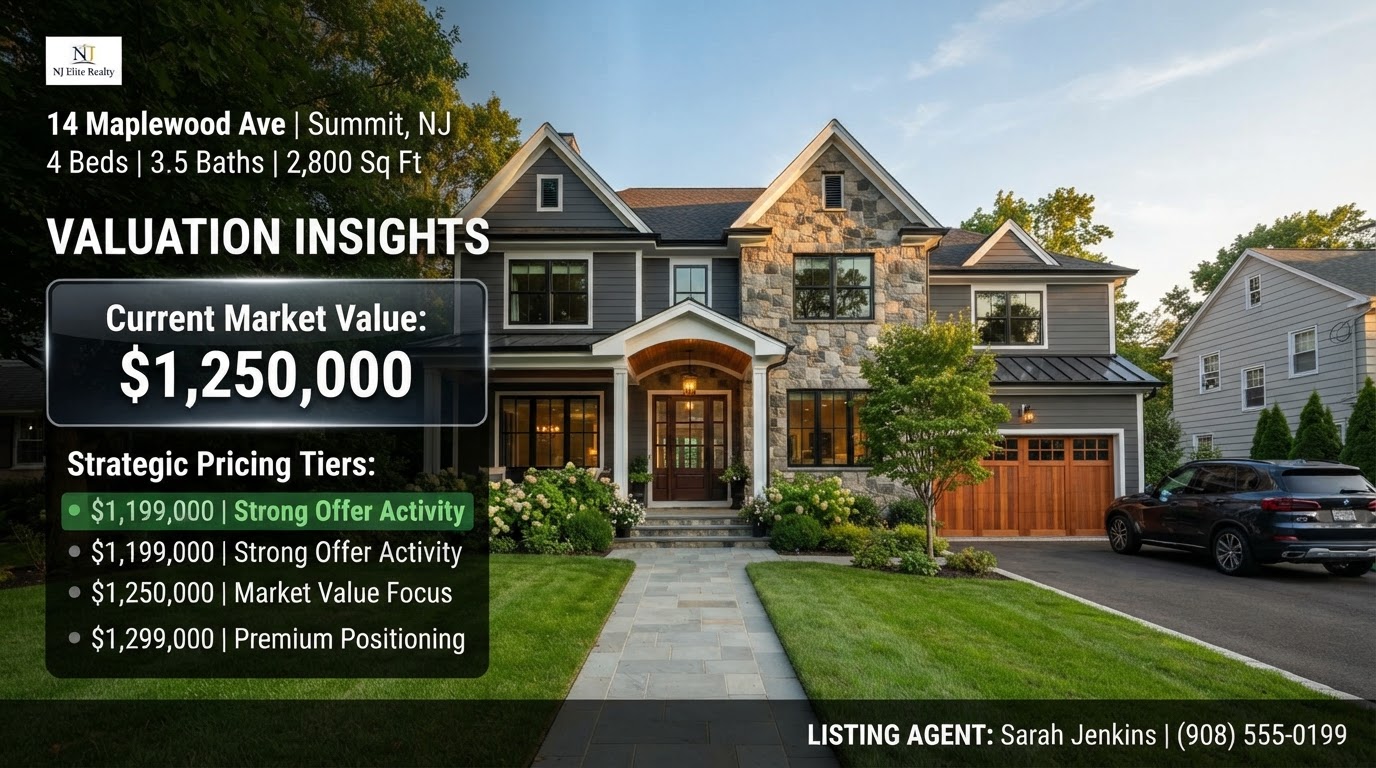
Strategic pricing means setting a price that attracts serious buyers while leaving room for negotiation. Some agents recommend pricing just below a psychological threshold (for example, $499,000 instead of $510,000) to capture more search traffic. Others recommend pricing at market value and letting the home sell on its merits.
The right approach depends on your goals, your timeline, and your local market. A home value review gives you a data-driven starting point.
When to Adjust Your Price
If your home has been listed for two to three weeks with few showings or offers, the market is telling you the price is too high. Listen to the data, not your emotions. A timely price adjustment can reinvigorate interest and lead to a sale.
If you are getting showings but no offers, the issue may be price or condition. Ask your agent to gather feedback from showing agents to identify the pattern.
More Articles for New Jersey Home Sellers
If your home needs work before selling, read our guide on selling a house that needs repairs. For a comparison of selling paths, see cash offer vs. listing. To understand what costs to expect, read about seller closing costs in New Jersey. If you are selling on your own, our FSBO help guide covers pricing and marketing without an agent. For a full overview, visit our seller resources hub.

Christian Tibok
New Jersey REALTOR with Fathom Realty NJ LLC. Christian reads shifting market data to price homes that still sell. Learn more about Christian.