
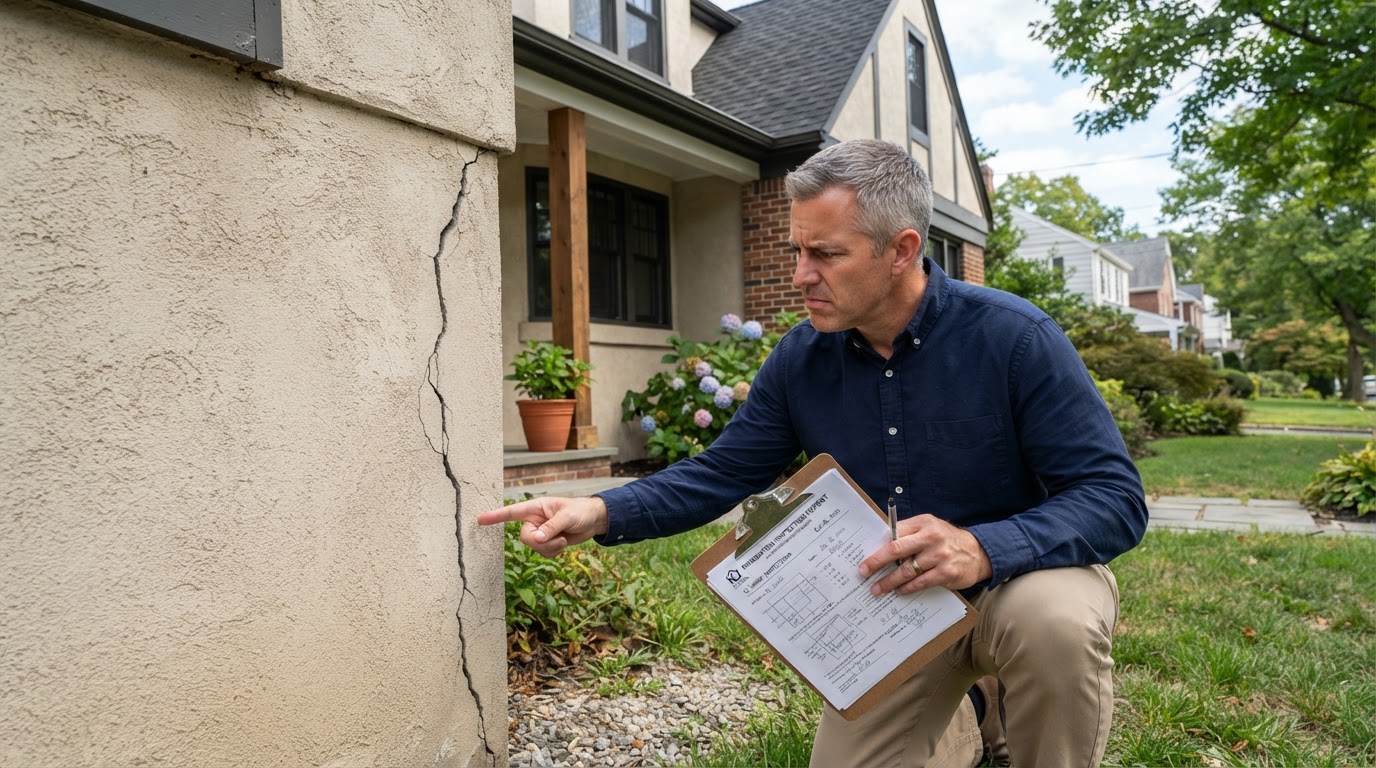
Discovering a foundation crack — or getting an inspection report that flags settlement — can feel like the end of a sale. It is not. Foundation problems are some of the most common structural issues in both New Jersey and Florida homes, and there are clear paths to sell whether you repair first or sell as-is. The key is understanding what you are dealing with, disclosing it honestly, and choosing the strategy that fits your budget and timeline.
Common Foundation Issues in NJ and FL
The soil and construction styles in each state create different foundation challenges.
- New Jersey: Older homes often have stone, brick, or block foundations that settle over decades. Horizontal cracks in block walls, bowing, and water seepage are common. Clay-heavy soils in parts of the state contribute to movement.
- Florida: Most homes sit on concrete slabs. Settlement, hairline slab cracks, and sinkhole-related movement are the main concerns. Sandy soil and a high water table can amplify shifting.
Not every crack is a crisis. Vertical hairline cracks are often normal shrinkage. Horizontal cracks, stair-step cracks in block, and doors or windows that stick are the signs that warrant a structural engineer's evaluation.
Disclosure Requirements in NJ and FL
Both states require you to disclose known material defects. A foundation problem you are aware of is material.
- Florida: The standard seller disclosure form asks directly about structural problems, settlement, and prior repairs. Answer honestly and completely.
- New Jersey: Sellers must disclose known conditions that could affect a buyer's decision. If you know the foundation has issues, disclose it.
Disclosing does not kill the sale — hiding does. Buyers who learn about a foundation problem after closing can pursue legal action. Honest disclosure builds trust and often attracts buyers who are prepared for the work.
How Foundation Problems Affect Financing
This is where many traditional sales stall. A buyer's lender orders an appraisal, and appraisers are trained to flag visible structural defects. If the appraiser notes foundation problems, the lender may:
- Require a structural engineer's report before moving forward.
- Condition the loan on the repairs being completed before closing.
- Reduce the appraised value to reflect the defect.
- In severe cases, decline the loan entirely.
FHA, VA, and USDA loans are especially strict about structural soundness. This is why many sellers with foundation issues turn to cash buyers or as-is sales — those buyers are not bound by lender requirements.
Repair First or Sell As-Is?
The right choice depends on the severity of the problem, your budget, and your timeline.
- Repair first if: The fix is minor and affordable, you have time, and you want the widest buyer pool and the highest net price. Get a structural engineer's report and keep all repair documentation to show buyers.
- Sell as-is if: The repair is major or expensive, you need to move quickly, or you do not have the cash to fund the work. A cash offer or as-is sale lets you avoid the repair cost and the financing uncertainty.
Compare both paths side by side with our options comparison to see which nets you more.
Pricing a Home With Foundation Issues
Buyers and appraisers typically discount a foundation-damaged home by the estimated repair cost plus a risk premium for the unknown. A realistic approach:
- Get a structural engineer's assessment and a repair estimate from a licensed contractor.
- Start with a home value estimate for the home in good condition.
- Subtract the repair cost and a 10–20% risk premium for buyer uncertainty.
- Price at or slightly below that number to attract serious, informed buyers quickly.
Overpricing a foundation-damaged home is the fastest way to a stale listing. For more on this, read about selling a house that needs repairs.
Your Selling Options
- Traditional listing with disclosure: Works for minor issues with a repair credit or pre-negotiated fix. Slower and financing-dependent.
- Renovate & sell: We fund the foundation repair upfront and list for top value. Good when the repair is manageable. See Renovate & Sell.
- Cash offer as-is: The simplest path for major foundation issues. No repairs, no financing contingencies, fast closing. See cash offer options.
Take the Next Step
Foundation problems are serious, but they are solvable. The worst thing you can do is ignore them or try to hide them. If you are dealing with foundation issues, start with a home value estimate or schedule a conversation with Christian to compare your repair and as-is options honestly.
Related Reading for NJ and FL Sellers
For more, read about selling a house that needs repairs, cash offer vs. listing, or selling with code violations.

Christian Tibok
REALTOR serving homeowners across New Jersey and Florida. Christian helps sellers with structural and repair challenges compare their options and choose the path that protects their equity. Learn more about Christian.