Solar panels are increasingly common on homes in both New Jersey and Florida, but they create a fork in the road when you sell. Owned solar can be a selling point that adds value and lowers the buyer's energy costs. Leased solar, or a power purchase agreement (PPA), can complicate the sale because the panels are not part of the real estate and must be assumed by the buyer or paid off at closing. Understanding the difference before you list is the key to a smooth sale.
Owned Solar: A Selling Point
When you own your solar panels outright or have fully paid off the loan used to purchase them, the panels are part of the real estate and transfer with the property. The buyer inherits the energy savings without a monthly lease payment, which can make your home more attractive.
- New Jersey: Owned solar can generate Solar Renewable Energy Credits (SRECs), which provide ongoing revenue that transfers to the buyer. This is a genuine value-add.
- Florida: High electricity costs and abundant sunshine make owned solar a strong selling point. Buyers appreciate lower monthly utility bills and the environmental benefit.
Be prepared to share documentation showing the panels are owned outright, the system's production history, and any warranty that transfers. A home value estimate that accounts for the solar system helps you price accurately.
Leased Solar: The Complication
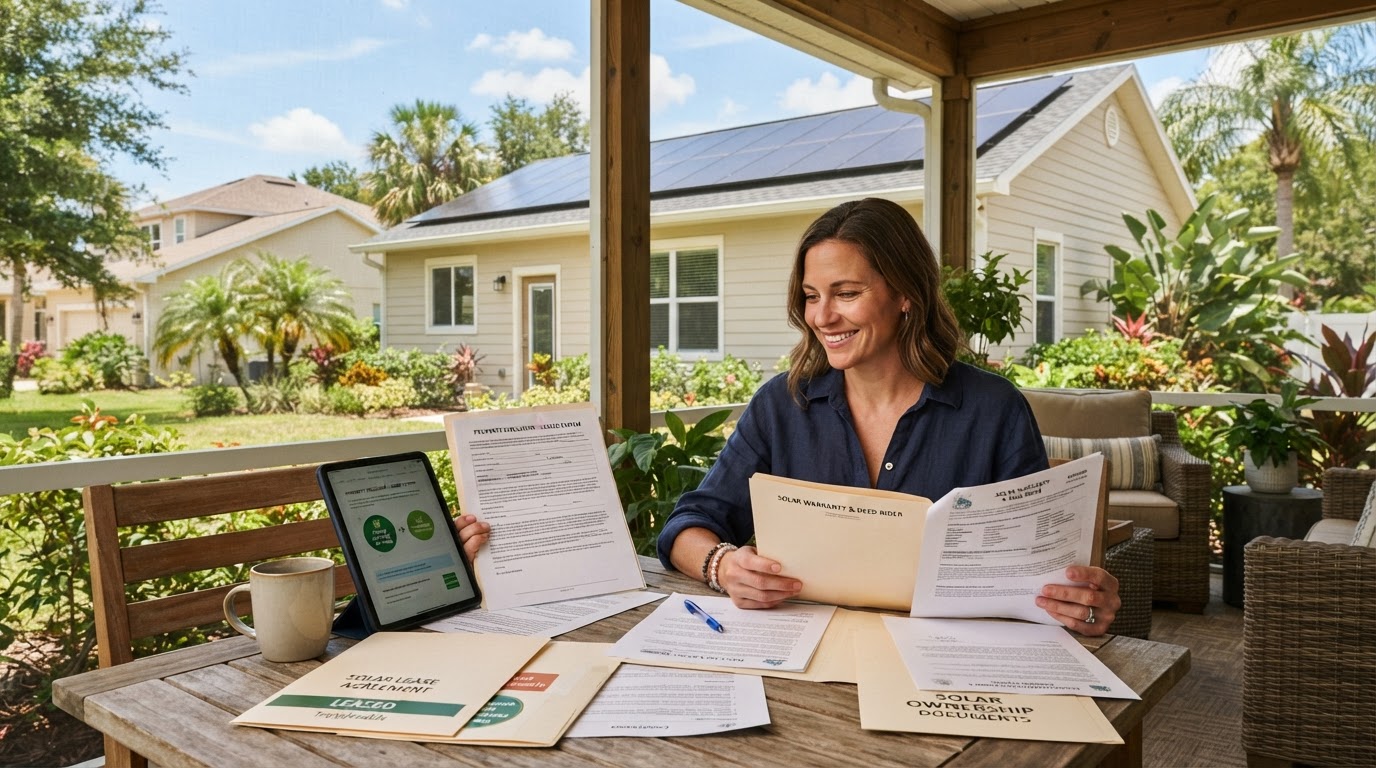
When your solar panels are leased or under a PPA, a third party owns the equipment. The panels are not part of the real estate and cannot transfer with the title. The buyer must either:
- Assume the lease or PPA by qualifying with the leasing company, which runs credit and adds the payment to their debt-to-income ratio.
- Have the lease paid off by you before closing or at closing, which requires purchasing the system from the leasing company.
This extra step can delay a sale and, in some cases, cause a buyer to walk if they cannot qualify or do not want the ongoing payment. Lenders also factor the lease payment into the buyer's debt-to-income ratio, which can reduce the buyer's purchasing power and the price they can offer for your home.
What to Disclose
In both New Jersey and Florida, you must disclose the solar lease or PPA as a material fact. The buyer's lender will also require documentation of the agreement. Disclose early:
- The type of agreement (lease or PPA).
- The monthly payment and remaining term.
- Whether the lease is assumable and the buyer qualification process.
- The buyout cost if the lease must be paid off at closing.
How Leased Solar Affects Financing
Conventional lenders will generally approve a mortgage with a leased solar system, but the lease payment counts against the buyer's debt-to-income ratio. FHA and VA loans have additional requirements, including that the lease cannot be terminated by the leasing company for a set number of years. If the lease terms do not meet the lender's requirements, the buyer may not qualify, which is why cash and as-is sales are common for leased-solar homes.
If your buyer's financing is at risk because of a solar lease, a cash offer can bypass the lender entirely. Compare your options with our selling options comparison to see which path nets you the most.
NJ vs FL: Key Differences
- SREC revenue: New Jersey's SREC program adds ongoing value to owned solar that Florida does not have, making owned solar a stronger selling point in NJ.
- Electricity costs: Florida's high electricity costs make the energy savings from solar more impactful for buyers, supporting value for owned systems.
- Lease prevalence: Florida has seen aggressive solar leasing expansion, so leased-solar sales are more common and buyers are somewhat more familiar with the process.
Steps to Take Before You List
- Confirm whether your panels are owned, financed, or leased under a PPA.
- Gather the lease or PPA agreement, remaining term, monthly payment, and buyout cost.
- Check whether the lease is assumable and what the buyer qualification process requires.
- Get a home value estimate that accounts for the solar system and its ownership status.
- Compare your selling options, including as-is and cash-offer paths.
Selling a Solar Home With Confidence
Whether your panels are owned or leased, the key to a smooth sale is preparation and transparency. Gather your documentation, disclose honestly, and choose the selling path that fits your ownership structure. Start with a home value estimate or schedule a conversation with Christian to map out your best path.

Christian Tibok
REALTOR serving homeowners across New Jersey and Florida. Christian helps sellers with solar homes navigate lease transfers, disclosures, and financing to sell confidently. Learn more about Christian.