
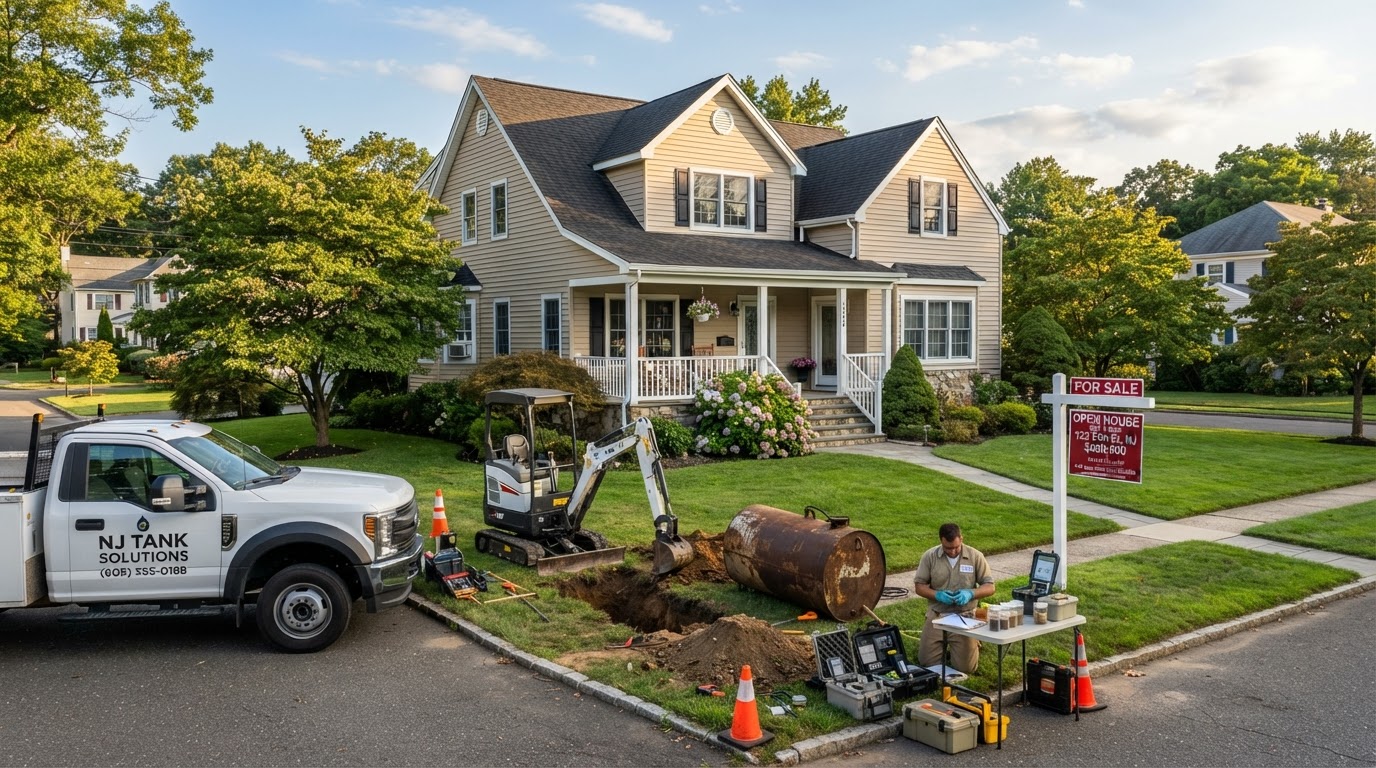
Thousands of New Jersey homes still have underground heating oil tanks, many of them decades old. If you are selling, that buried tank is one of the first things a buyer's attorney and home inspector will ask about. The good news is that an oil tank does not have to stop your sale. It does mean you need to understand your options, your disclosure obligations, and how the tank affects what buyers and lenders will accept.
Why Underground Oil Tanks Are a Big Deal in New Jersey
New Jersey has one of the highest concentrations of older residential heating oil tanks in the country. Many were installed in the 1950s through 1980s and were made of bare steel, which corrodes over time. Even tanks that were properly abandoned can raise red flags for buyers because there is no way to know whether a leak occurred before closure without soil testing.
The concern is environmental liability. If a tank has leaked, contaminated soil and potentially groundwater must be remediated under New Jersey Department of Environmental Protection (NJDEP) guidelines. That liability can attach to the property, which is why buyers and lenders are so cautious.
Your Three Main Options
- Remove the tank before listing. This is the cleanest path. A licensed contractor removes the tank, takes soil samples, and issues a closure report. A clean report lets you market the home with confidence and removes the issue from buyer negotiations entirely.
- Abandon the tank in place (if already done). Some tanks were legally abandoned by filling with sand or foam. You will need the closure documentation. Without soil test results, buyers may still request testing or a price concession.
- Sell as-is to a cash buyer. If you do not want to spend money upfront, a cash offer or as-is sale lets you transfer the property and the tank responsibility to a buyer who accepts the risk. Expect the offer to reflect the cost of removal and any uncertainty.
How Much Does Removal and Testing Cost?
For a standard non-leaking residential tank, removal and soil testing in New Jersey typically runs between $1,500 and $3,000. The final cost depends on tank size, location, accessibility, and whether utilities need to be disconnected.
If soil testing reveals contamination, remediation costs escalate quickly. A minor leak might cost $5,000 to $10,000, while extensive soil and groundwater contamination can exceed $25,000. This is why buyers and lenders want a clean soil report before committing.
Disclosure: What You Must Tell Buyers
New Jersey requires sellers to disclose known material facts about the property. An underground oil tank, whether active, abandoned, or removed, is material. If you know the tank exists or previously existed, you must disclose it.
- Disclose the tank's location, whether it is active or abandoned, and whether you have closure documentation.
- If the tank was removed, provide the closure report and soil test results.
- If you do not know whether a tank exists, say so honestly. Buyers can order a tank sweep during inspection.
Failing to disclose a known tank can lead to liability after closing, including the buyer seeking reimbursement for removal and remediation. Transparency protects you and keeps the sale moving.
How an Oil Tank Affects Buyer Financing
FHA and VA loans are particularly strict. An active or un-remediated underground oil tank will often trigger a loan condition requiring removal and a clean soil test before approval. Conventional lenders vary, but most will require the same if the tank is flagged during the appraisal or inspection.
This is why a tank that has not been removed can shrink your buyer pool. Cash buyers and investors are often the only ones willing to take on the property as-is. If you want the broadest pool of financed buyers, removing the tank and obtaining a clean soil report before listing is the safest approach.
Are There State Grants to Help?
The NJDEP has offered grants through its Underground Storage Tank program for qualifying residential tanks, and a confirmed leak may qualify for the Petroleum Underground Storage Tank Remediation, Upgrade, and Closure Program. Funding availability changes over time, so check the current NJDEP guidelines or speak with a licensed tank contractor about whether your situation qualifies.
Steps to Take Before You List
- Determine whether a tank exists. If unsure, order a professional tank sweep.
- If a tank is present, get quotes from licensed NJDEP-registered contractors for removal and soil testing.
- Check whether you qualify for any state grant or assistance program.
- Gather all closure documentation if the tank was already removed or abandoned.
- Compare your options: remove before listing, or sell as-is to a cash buyer who accepts the tank.
Selling As-Is With an Oil Tank
If you cannot or do not want to remove the tank before selling, an as-is sale is a valid path. A cash offer lets you avoid the upfront cost of removal and the uncertainty of soil test results. The buyer accepts the property and the tank responsibility, and the price reflects that risk. Use our options comparison to see whether removing the tank first or selling as-is nets you more.
An Oil Tank Does Not Have to Stop Your Sale
Buried oil tanks are common in New Jersey, and they are manageable. The sellers who do best are the ones who understand their options, disclose honestly, and choose the path that fits their timeline and budget. If you are preparing to sell a home with an oil tank, start with a home value estimate or schedule a conversation with Christian to map out your best path.
Related Reading for New Jersey Sellers
For more, read about selling a house that needs repairs, seller closing costs in New Jersey, or cash offer vs. listing.

Christian Tibok
REALTOR serving homeowners across New Jersey and Florida. Christian helps sellers navigate oil tank issues, disclosures, and as-is selling options with confidence. Learn more about Christian.