
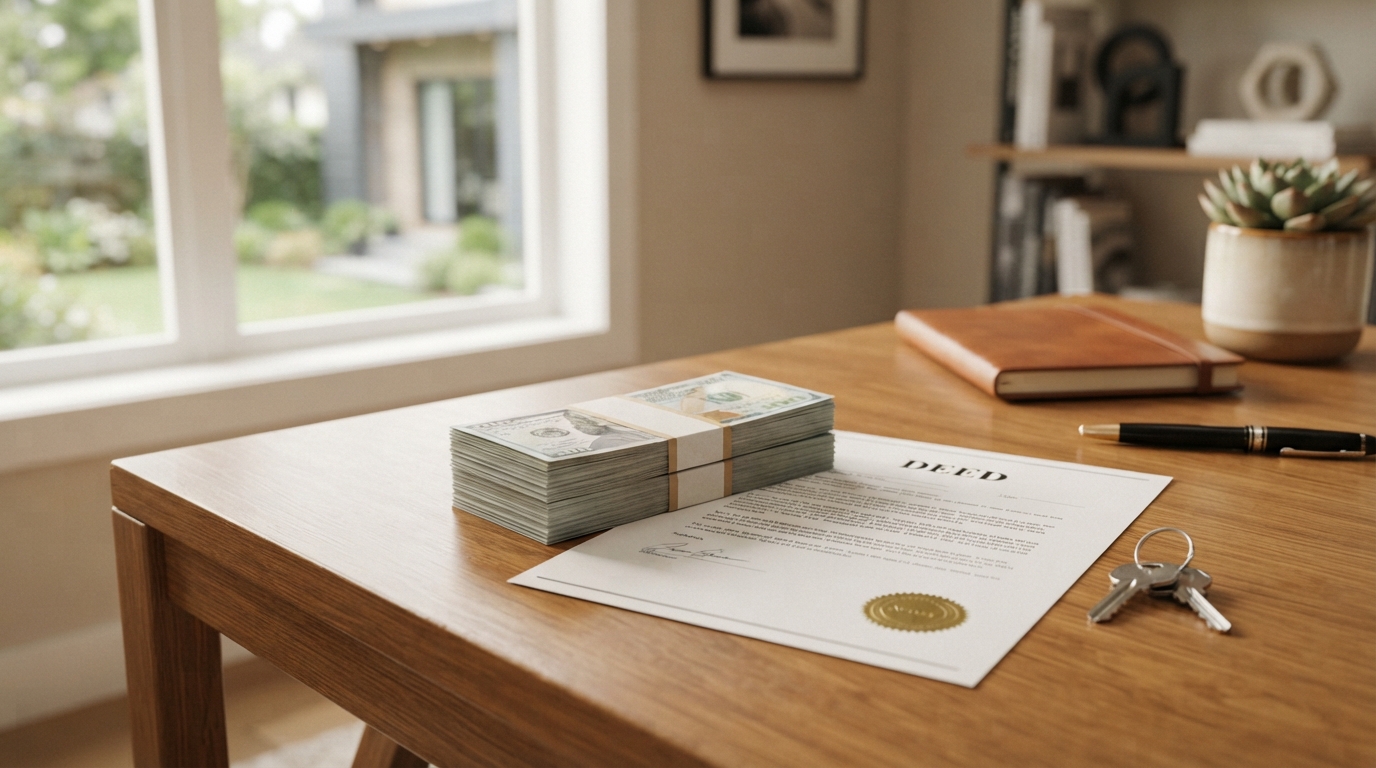
You have probably heard the term "cash offer" in real estate, especially if you have been exploring ways to sell your home quickly. But what does it actually mean, and how does the process work? Whether you are in New Jersey or Florida, understanding cash offers helps you make an informed decision about whether this path fits your situation.
What Is a Cash Offer?
A cash offer is a purchase offer where the buyer has the full purchase price available in cash and does not need a mortgage loan to complete the transaction. This eliminates several steps that typically slow down a traditional sale: loan approval, appraisal, and lender-required repairs.
Cash buyers can be individuals, investor groups, or companies that specialize in buying properties directly from homeowners. The key advantage is speed and certainty. Without a lender involved, the transaction can close much faster and with far fewer points of failure.
How a Cash Offer Works: Step by Step
Step 1: Request an Offer
You provide basic information about your property: address, condition, and your timeline. Some cash buyers offer to view the property in person, while others may make an offer based on photos and public records. You can request a cash offer through our site to start the process.
Step 2: Receive the Offer
The buyer reviews your property details and presents a written offer. This offer will include the purchase price, the proposed closing timeline, any contingencies, and whether the sale is as-is. Take time to review the terms carefully. The highest offer is not always the best if it comes with unfavorable conditions.
Step 3: Verify Proof of Funds
Before accepting, verify that the buyer actually has the cash. A legitimate cash buyer will provide proof of funds, typically a bank statement or letter from a financial institution. This is a critical step that protects you from offers that fall through.
Step 4: Accept and Sign the Contract
Once you accept the offer, you sign a purchase agreement. In New Jersey, this enters a three-business-day attorney review period where either party can cancel. In Florida, the contract is typically binding upon signing unless it includes specific contingencies.
Step 5: Title Search and Closing Preparation
A title company or attorney conducts a title search to identify any liens, judgments, or encumbrances. Any liens must be resolved at closing. This step typically takes 5 to 10 days. In both NJ and FL, a clean title is required for the sale to close.
Step 6: Close the Sale
At closing, you sign the deed transferring ownership to the buyer. The buyer pays the purchase price, and any liens, closing costs, or fees are deducted from your proceeds. You receive the remaining funds, and the sale is complete. The entire process can take as little as 7 to 14 days.
Cash Offer vs. Traditional Listing
In short: a cash offer trades some price for speed, certainty, and an as-is sale, while a traditional listing aims for maximum market price but takes longer and carries financing and inspection risk. We have a full side-by-side breakdown — including a comparison table, net-proceeds analysis, and the hybrid cash-floor-plus-listing option — in our dedicated Cash Offer vs. Listing guide. You can also compare all your selling options on one page.
When a Cash Offer Makes Sense
- You need to sell quickly due to a relocation, divorce, or financial hardship
- Your home needs significant repairs you cannot or do not want to fund
- You inherited a property and want to liquidate without renovation
- You are a landlord dealing with difficult tenants and want out
- You value certainty and speed over maximizing the sale price
- The property has title issues or liens that complicate a traditional sale
When a Traditional Listing May Be Better
- Your home is in good condition and in a desirable area
- You have time to prepare, market, and wait for the right buyer
- Maximizing sale price is your top priority
- You are not in a rush and can afford to hold the property
NJ vs FL: Key Differences in Cash Sales
- Attorney review: New Jersey has a mandatory three-business-day attorney review period. Florida does not, so cash sales can close even faster in FL.
- Transfer taxes: New Jersey charges a realty transfer fee. Florida charges a documentary stamp tax on deeds. Both are typically paid by the seller but can be negotiated.
- Title process: Both states require a clear title. NJ commonly uses attorneys for title work, while FL typically uses title companies.
More Articles for NJ and FL Homeowners
For a deeper comparison, read cash offer vs. listing. If your home needs work, see repairs vs. selling as-is. For the full seller resource hub, visit our seller resources page.

Christian Tibok
REALTOR serving homeowners across New Jersey and Florida. Christian helps homeowners navigate complex situations with honest guidance and a no-pressure approach. Learn more about Christian.