
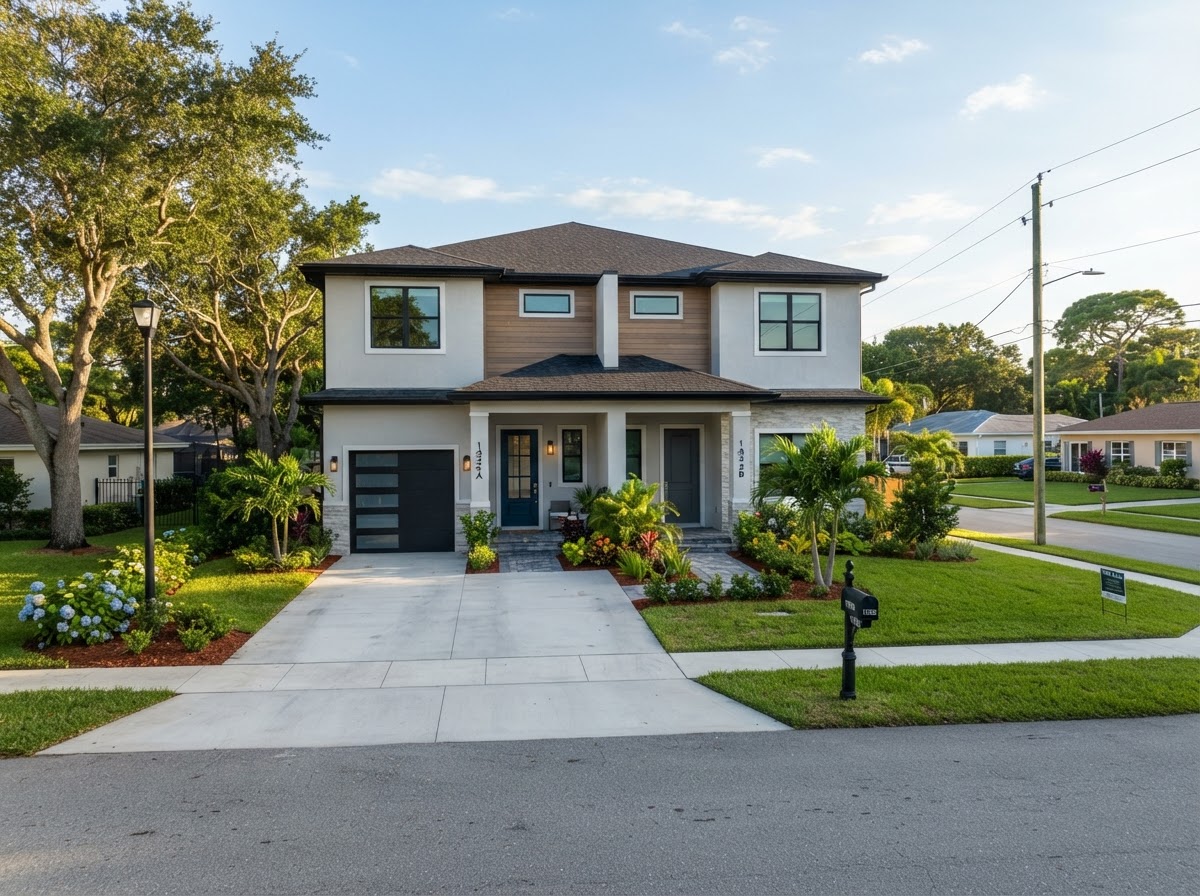
For many first-time and early-career buyers, the biggest barrier is not credit — it is the monthly payment. House hacking flips that equation. Instead of bearing the entire mortgage yourself, tenants help pay it down while you build equity and gain landlord experience. Both New Jersey and Florida have strong rental markets that make this strategy viable, and the financing available to owner-occupants is far better than what pure investors get.
What Counts as House Hacking
House hacking is a broad term for any strategy where you live in a property and collect rent from part of it. The three most common approaches are:
- Multi-unit property: Buy a duplex, triplex, or fourplex. Live in one unit and rent the others. This is the classic and most powerful form because each unit is self-contained.
- Single-family with rooms: Buy a house and rent out individual bedrooms, often to roommates or traveling nurses. Works well near universities and hospitals in both NJ and FL.
- Live-in-then-rent: Buy a home, live in it for the required occupancy period, then move out and keep it as a rental while you buy your next property.
Financing a Multi-Family Owner-Occupant Purchase
The key advantage of house hacking is that you qualify for owner-occupant financing — lower down payments and better rates than an investor loan — because you will live in the property.
- FHA loans: 3.5% down on a 1- to 4-unit property. You can use 75% of market rent from the other units to qualify. This is the most popular house-hacking loan. Learn more in our FHA, VA & USDA loan guide.
- VA loans: Zero down on a 1- to 4-unit property for eligible veterans. No mortgage insurance. Rental income can help qualify.
- Conventional loans: 5% down on a 2-unit, 15% on a 3- or 4-unit (with mortgage insurance). Better for buyers with stronger credit who want to avoid FHA's lifetime mortgage insurance.
All three require you to occupy the property within 60 days and live in it for at least one year. After that, you can move out and keep the loan in place.
How Rental Income Helps You Qualify
Lenders typically allow you to count 75% of the documented market rent from the other units toward your qualifying income. The remaining 25% covers vacancies and operating expenses. If the rent is strong enough, the property can essentially qualify on its own cash flow, which means you may be approved for a multi-unit property even if a single-family home at the same price would stretch your debt-to-income ratio too far.
Your lender will usually require a rent estimate from an appraiser or a market rent analysis. Being conservative with your rent assumptions protects you if a unit sits vacant longer than expected.
NJ vs FL: Market Considerations
- New Jersey: Dense, transit-oriented markets near NYC support strong rents. Multi-family inventory is common in Hudson, Essex, and Bergen counties. Property taxes are high, so run the numbers carefully — the tax bill can erase rental profit if rents are modest.
- Florida: Lower property taxes and no state income tax improve cash flow. Strong rental demand from in-migration, retirees, and seasonal workers. Insurance costs — especially wind and flood — are the variable to watch. See our wind mitigation guide.
Landlord Responsibilities You Accept
When you house hack, you become a landlord. Both New Jersey and Florida require you to provide a safe, habitable dwelling and follow proper procedures for deposits, notices, and evictions.
- New Jersey: Strong tenant protections. Many towns have just-cause eviction ordinances. Security deposits must be placed in a separate interest-bearing account.
- Florida: More landlord-friendly, but you still must give proper written notice and follow the court eviction process. Security deposit rules depend on whether you give notice when moving out.
If managing tenants yourself feels overwhelming, budget 8–12% of gross rent for a property manager. Many house hackers start self-managing to learn the ropes, then hand it off later.
Insurance and Disclosure
Tell your insurance agent exactly how the property will be used. A standard owner-occupant policy may not cover tenant-related losses, and in Florida your windstorm and flood coverage must reflect the rental use. Failing to disclose it can give the insurer grounds to deny a claim. You may also need an umbrella liability policy once you have tenants.
Is House Hacking Right for You?
House hacking is ideal for buyers who are comfortable sharing a property, want to build equity faster, and plan to hold the property long-term. It is less suited to buyers who value complete privacy or who plan to move within a year. If you are exploring investment property more broadly, visit our investment properties page, and if you want to understand what you can afford, start with our mortgage calculator.
Ready to explore multi-family options in NJ or FL? Schedule a conversation with Christian, or browse our buyer guides and financing resources for more.

Christian Tibok
REALTOR serving homeowners across New Jersey and Florida. Christian helps buyers evaluate multi-family and house-hack opportunities with honest numbers and local market insight. Learn more about Christian.