
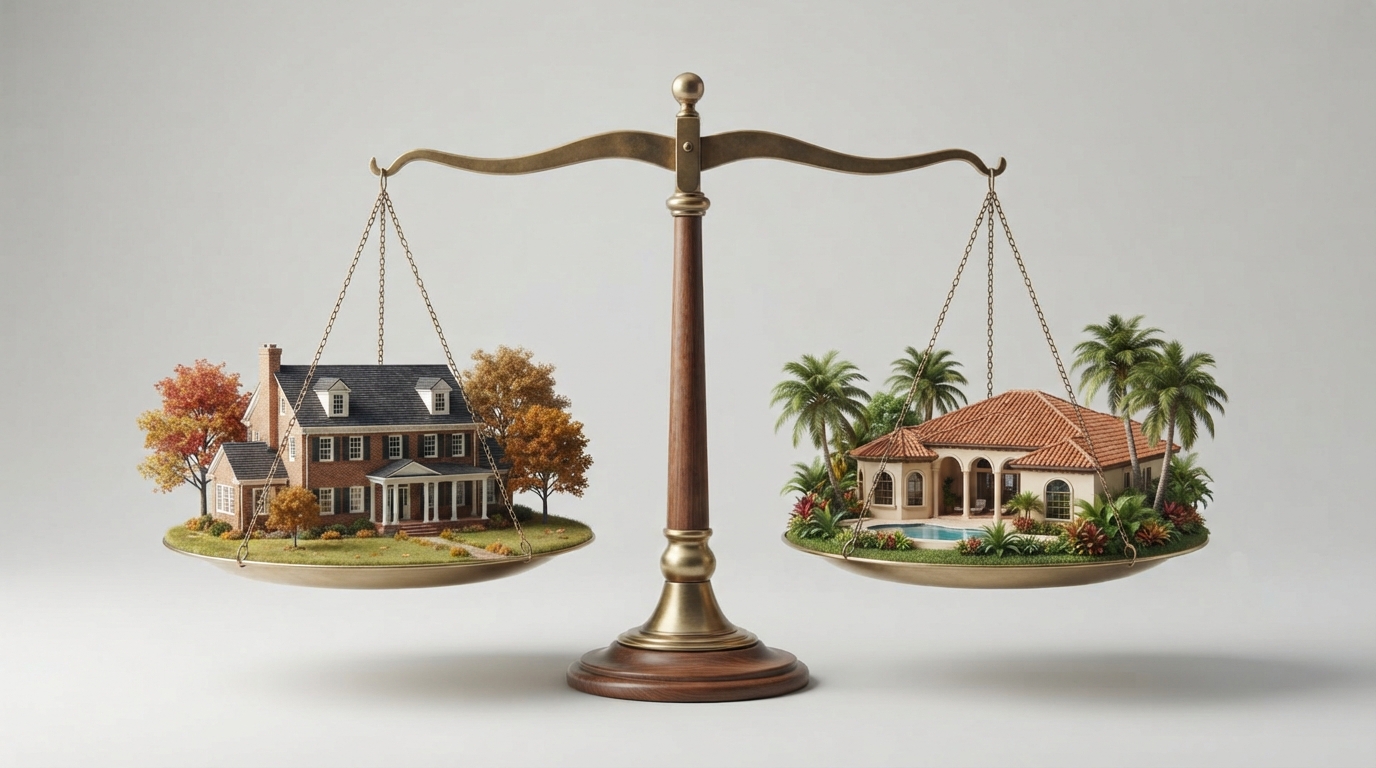
New Jersey and Florida are two of the most compared states for homeowners. One offers proximity to major Northeast metros with high property taxes, the other offers warm weather and tax advantages with higher insurance costs. Here is a clear, side-by-side breakdown to help you weigh the tradeoffs.
Property Taxes: NJ vs FL
This is the biggest difference. New Jersey has the highest average property taxes in the country, often exceeding 2% of a home's assessed value. Florida's property taxes are among the lowest, and the homestead exemption plus the Save Our Homes cap reduce them further for primary residences. For a similarly priced home, Florida property taxes can be less than half of New Jersey's. See the full breakdown in our NJ vs FL property tax comparison.
State Income Tax
Florida has no state income tax. New Jersey has a progressive income tax that can reach nearly 9% for high earners. For retirees and high-income households, this is a significant factor in Florida's favor.
Homeowners Insurance
Florida flips the script here. Due to hurricane risk, Florida homeowners insurance is among the most expensive in the country, and wind mitigation, roof age, and flood zone heavily influence premiums. New Jersey insurance is generally lower, though coastal areas carry their own wind and flood considerations. Always factor insurance into your total cost of ownership in Florida.
Closing Process and Costs
The closing process differs between the two states. New Jersey is an attorney state, so a real estate attorney handles contract review, the three-day attorney review period, and closing. Florida typically closes through a title company without a required attorney. Both states charge transfer-related costs, but the structure and timeline differ. Compare NJ seller closing costs and FL seller closing costs for details.
Selling Timeline
Both states average roughly 45 to 90 days for a traditional sale, but the drivers differ. New Jersey's pace depends on price band and season, while Florida's is shaped by snowbird demand and hurricane season. A direct cash offer closes in 10 to 14 days in either state. Compare how long it takes to sell in NJ and how long it takes to sell in FL.
Lifestyle and Climate
- New Jersey: Four distinct seasons, proximity to New York and Philadelphia, strong public schools, and established commuter infrastructure.
- Florida: Year-round warmth, no state income tax, outdoor and waterfront lifestyle, and strong in-migration driving demand.
Which State Is Better for You?
There is no universal winner. If minimizing taxes and enjoying warm weather year-round matters most, Florida has the edge. If you value proximity to Northeast metros, four seasons, and established infrastructure, New Jersey may fit better. Many homeowners choose both, selling in NJ and buying in FL for retirement or lifestyle change.
Relocating Between NJ and FL
If you are selling in one state and buying in the other, timing both transactions is the hardest part. Working with an agent licensed in both states lets you coordinate the sale and purchase without a gap or overlap. Read our complete NJ to FL relocation guide to plan the transition.

Christian Tibok
Licensed REALTOR serving homeowners in New Jersey and Florida. Christian helps homeowners compare both markets and coordinate a smooth cross-state move. Learn more about Christian.