
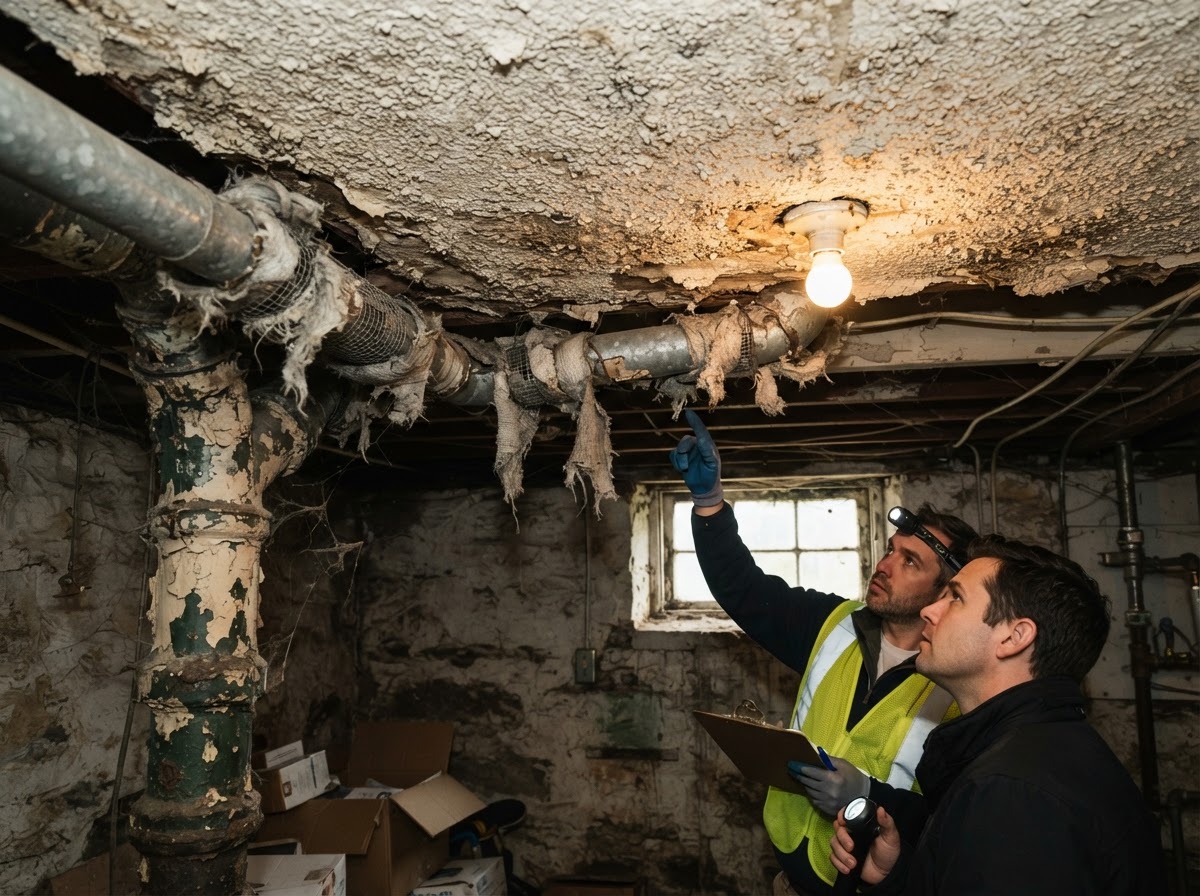
If your home was built before 1980, it may contain asbestos, lead-based paint, or knob-and-tube wiring. These materials sound scary, but in most cases they are not an immediate hazard when left undisturbed. The key to selling is understanding what you have, disclosing it honestly, and choosing the right strategy.
Common Hazardous Materials in Older NJ and FL Homes
- Asbestos: Found in popcorn ceilings, floor tiles, pipe insulation, siding, and ductwork in homes built before the 1980s. Dangerous only when friable (crumbling) and inhaled.
- Lead-based paint: Used in homes built before 1978. A hazard when it peels, chips, or creates dust — especially for young children.
- Knob-and-tube wiring: Common in pre-1950 homes. Not inherently dangerous if intact, but insurers and lenders often flag it as a fire risk.
Disclosure Requirements
Both states require disclosure of known material defects. Federal law adds a specific lead paint requirement.
- Federal lead paint rule: For homes built before 1978, you must disclose known lead-based paint, provide the EPA pamphlet, include a warning statement in the contract, and give the buyer a 10-day inspection opportunity.
- Florida: The seller disclosure form asks about hazardous materials and known defects. Answer honestly.
- New Jersey: Sellers must disclose known conditions that could affect a buyer's decision.
Disclosing does not kill the sale — hiding does. Buyers who learn about hazards after closing can pursue legal action.
How These Materials Affect Financing
Lenders are primarily concerned with active hazards, not the mere presence of these materials.
- Intact asbestos floor tiles or siding rarely affect financing.
- Peeling lead paint accessible to children may require stabilization before an FHA or VA loan can close.
- Knob-and-tube wiring may trigger an insurance requirement to rewire, which can stall a financed sale.
This is why many sellers of older homes turn to cash buyers or as-is sales — they are not bound by lender repair requirements.
Remove, Encapsulate, or Sell As-Is?
- Leave undisturbed: If materials are intact and not a hazard, disclosure and as-is sale is often the most cost-effective path.
- Encapsulate: Sealing lead paint or wrapping asbestos is far cheaper than removal and often satisfies lenders and buyers.
- Renovate & sell: We can fund professional abatement upfront and list for top value. See Renovate & Sell.
- Cash offer as-is: The simplest path when abatement is expensive or you need speed. See cash offer options.
Compare both paths with our options comparison.
Pricing an Older Home With Hazards
Buyers discount a home with known hazards by the estimated remediation cost plus a risk premium. Get a professional assessment, start with a home value estimate, and price realistically. Overpricing leads to a stale listing.
Take the Next Step
Hazardous materials are common in older homes and they are manageable. Start with a home value estimate or schedule a conversation with Christian to compare your options honestly.
Related Reading for NJ and FL Sellers
For more, read about selling with foundation problems, selling with code violations, or selling a house that needs repairs.

Christian Tibok
REALTOR serving homeowners across New Jersey and Florida. Christian helps sellers of older homes navigate hazardous materials and choose the path that protects their equity. Learn more about Christian.