
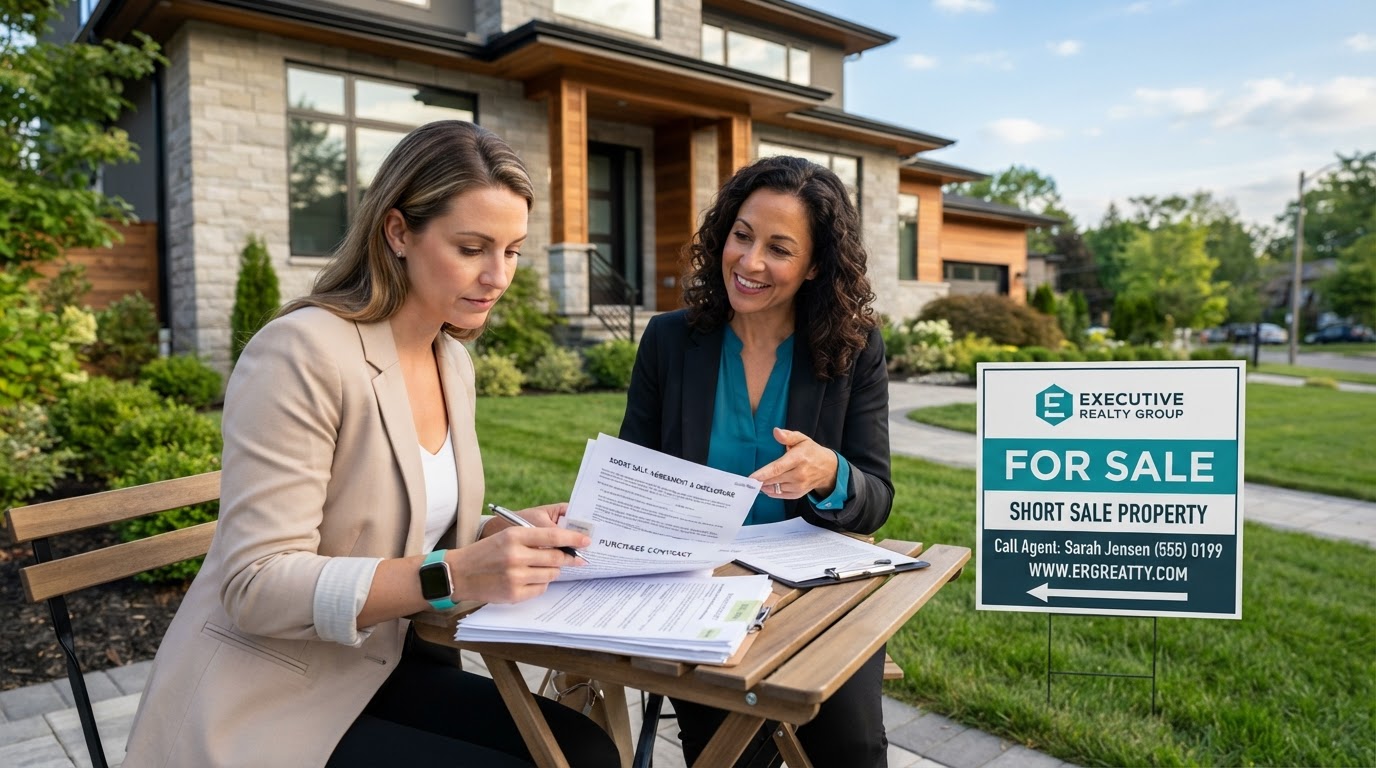
A short sale is not a foreclosure. The homeowner still owns the property and is selling it, but their lender has agreed to accept less than the full mortgage balance. For a buyer, that can mean an opportunity to purchase at a discount. It also means a longer, less predictable process. Understanding how short sales work in New Jersey and Florida helps you decide whether the wait is worth it.
How a Short Sale Purchase Works
The process starts like any other home purchase. You find a short-sale-listed home, tour it, and make an offer. The difference is that once the seller accepts your offer, the file goes to the seller's lender for approval. The lender reviews the offer, orders a broker price opinion or appraisal, and decides whether the price is acceptable. Only after the lender issues a written approval letter can the sale move toward closing.
In New Jersey, your offer is subject to a three-day attorney review period before it becomes binding. In Florida, the standard AS IS contract includes an inspection period. Both of these run alongside the lender's review, so the overall timeline is driven largely by how quickly the lender responds.
How Long Does It Take?
Short sale purchases typically take 60 to 120 days from offer to closing, and some take longer. The biggest variable is the seller's lender. Some lenders respond in a few weeks; others take several months, especially if there is a second mortgage or lien that also needs to approve the sale.
- Offer accepted by seller: 1 to 7 days
- Lender review and approval: 45 to 90 days
- Closing after approval: 30 to 45 days
If you have a rigid move date, a short sale may not be the right fit. Flexibility is essential.
Financing a Short Sale Purchase
Most buyers finance a short sale with a conventional, FHA, or VA loan. The key requirement is that the home must meet your lender's condition standards. Because short sale sellers are often in financial distress, the home may need repairs that the seller cannot pay for.
If the home needs work, ask your lender about renovation loan options:
- FHA 203(k): Finances the purchase and the cost of repairs in one loan.
- Fannie Mae HomeStyle: A conventional renovation loan for buyers with stronger credit.
Get pre-approved before making an offer. The seller's lender will want to see that you are qualified, and a strong pre-approval letter can make the difference between an accepted and a rejected offer.
Risks to Watch For
- Extended timeline: The lender can take months to respond, and there is no guarantee of approval.
- As-is condition: Short sale homes are usually sold as-is. The seller will not make repairs, so budget for them yourself.
- Multiple lien holders: If there is a second mortgage or HOA lien, every lien holder must approve, which can add weeks or derail the deal.
- Seller bankruptcy: If the seller files bankruptcy, the sale is paused and may not proceed.
- Price is not always a deal: The lender will only approve a price near market value. A low list price is often just a starting point to attract offers.
NJ vs FL: What Differs for Buyers
- Attorney review (NJ): New Jersey buyers go through a three-day attorney review period. Your attorney can negotiate terms and contingencies during this window.
- Inspection period (FL): Florida buyers use an inspection period under the AS IS contract. You can walk away or renegotiate based on inspection findings.
- Title process: In New Jersey, an attorney handles title. In Florida, a title company typically handles it. Either way, a clear title is required to close.
Steps to Take Before You Make an Offer
- Get pre-approved so the seller's lender sees you as a qualified buyer.
- Work with a buyer's agent who has short sale experience in NJ or FL.
- Research recent comparable sales so you know what the home is really worth.
- Inspect the home early so you understand its condition before the lender's approval arrives.
- Build flexibility into your timeline so you are not pressured if the lender is slow.
Is a Short Sale Right for You?
A short sale can be a smart purchase if you have the patience to wait and the flexibility to handle an as-is home. If you need to move on a specific date or want a turnkey property, a standard listing may be a better fit. The best way to decide is to compare what is available in your market and talk through your goals with an experienced agent.
If you are considering buying a short sale in New Jersey or Florida, start by browsing available homes or scheduling a conversation with Christian. If you are on the selling side of a short sale, visit our short sale page for seller-focused guidance.
Related Reading for NJ and FL Buyers
For more, read about buying a house in New Jersey, buying a house in Florida, or getting pre-approved for a mortgage.

Christian Tibok
REALTOR serving home buyers across New Jersey and Florida. Christian helps buyers navigate complex purchases like short sales with honest guidance and a no-pressure approach. Learn more about Christian.