
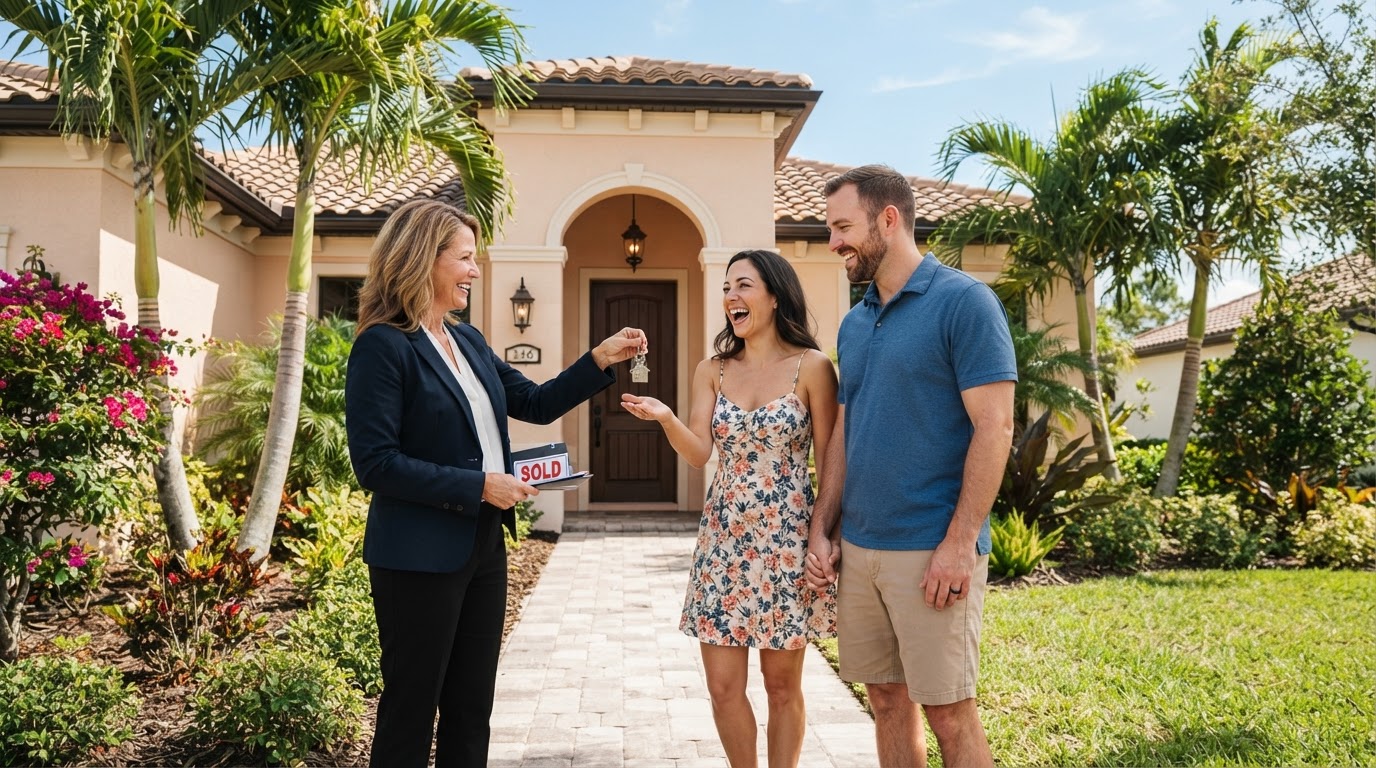
Buying a home in Florida is an exciting step whether you are a first-time home buyer, relocating from out of state (such as New Jersey), or purchasing an investment property. While the fundamentals of home buying apply nationwide, Florida has unique features regarding title companies, property tax exemptions, insurance requirements, and closing procedures that make the process meaningfully different from buying in the Northeast. This guide walks you through every step, with real cost figures and a realistic timeline.
What It Costs to Buy a House in Florida
Before diving into the process, it helps to understand the full cost picture. Florida's median home price is approximately $395,000 as of late 2026, though South Florida and coastal markets run significantly higher. Here is a breakdown of the major costs on a typical $400,000 Florida purchase:
| Cost Item | Typical Range | On a $400K Home |
|---|---|---|
| Down payment (3.5% FHA) | 3.5% of price | $14,000 |
| Down payment (3% conventional) | 3% of price | $12,000 |
| Closing costs | 2–5% of price | $8,000–$20,000 |
| Home inspection | $400–$700 | $500 |
| 4-point + wind mitigation | $150–$300 | $200 |
| Title insurance (owner policy) | Set by FL rate schedule | ~$2,500 |
| Homeowners insurance (annual) | $3,000–$6,000+ | $4,500 |
| Flood insurance (if required) | $400–$2,000+ | $700 |
| Earnest money deposit | 1–5% of price | $4,000–$20,000 |
Florida has no state transfer tax on the buyer (the seller pays documentary stamp taxes), which is a meaningful savings compared to New Jersey. However, Florida's insurance costs are substantially higher and must be factored into your monthly budget. For a full breakdown of buyer closing costs, see our Florida buyer closing costs guide.
The Florida Home Buying Timeline
From the day you start pre-approval to the day you get your keys, the full Florida buying process typically takes 6 to 10 weeks. Here is a realistic week-by-week timeline:
| Week | Milestone | What Happens |
|---|---|---|
| Week 1–2 | Pre-approval | Gather financial docs, get lender pre-approval letter |
| Week 2–4 | Home search | Tour properties, narrow down neighborhoods |
| Week 4–5 | Offer accepted | Submit offer, negotiate, sign binding contract |
| Week 5–6 | Inspection period | 10–15 day inspection window, order reports |
| Week 6–7 | Insurance + appraisal | Secure insurance, lender orders appraisal |
| Week 7–8 | Title work + clear to close | Title company clears title, lender issues final approval |
| Week 8–10 | Closing | Sign at title company, fund, receive keys |
Cash buyers can close much faster — often in 2 to 3 weeks — since there is no appraisal or lender underwriting. If you are buying and selling simultaneously, especially across NJ and FL, work with an agent licensed in both states to coordinate timing. See our guide on buying before you sell.
Step 1: Get Pre-Approved for Financing
Before viewing Florida properties, obtain a formal pre-approval letter from a reputable lender. Pre-approval confirms your maximum purchasing power, estimated interest rates, and required down payment. In Florida's more balanced 2026 market, sellers still favor buyers who can prove they are ready to close. Visit our Pre-Approval resource page to learn what financial documents lenders require, and explore FHA, VA, and USDA loan options that can reduce your down payment.
Step 2: Partner With a Licensed Florida Buyer Agent
Having an experienced REALTOR representing your interests ensures you negotiate effectively, understand contract nuances, and navigate HOA and condo restrictions or flood zone disclosures. A local agent also knows which neighborhoods hold value, which insurance carriers are writing policies in your area, and which communities have special assessments or pending litigation that could affect resale. If you are relocating from New Jersey, an agent licensed in both states can coordinate your sale and purchase seamlessly.
Step 3: Search Properties and Submit an Offer
Start your search by browsing just-listed Florida homes or exploring new construction communities. When you find the right property, your agent crafts an offer using the standard Florida AS IS Residential Contract or the standard contract. Unlike New Jersey, Florida does not have a formal attorney review period — once signed by both buyer and seller, the contract becomes binding immediately. Your earnest money deposit (typically 1–5% of the price) is due within a few days and is held in escrow by the title company. Learn how to structure a strong offer in our competitive offer guide.
Step 4: Inspection Period & Title Work
During the inspection period (typically 10 to 15 days), hire a licensed Florida home inspector to check the roof, HVAC, plumbing, and electrical. In Florida, you should also order a 4-point inspection and a wind mitigation report — both are essential for securing homeowners insurance and can reduce your premiums significantly. Concurrently, a title company verifies clear title, checks for liens, and prepares title insurance. Florida buyers should understand the role of title insurance and how it protects against title defects discovered after closing. For a full walkthrough of what to check, see our home inspection guide for buyers.
Step 5: Secure Insurance & Prepare for Closing
Florida lenders require proof of homeowners insurance before closing, and in many areas, flood insurance and windstorm coverage are also required. Start getting insurance quotes as soon as you have an accepted offer — Florida's insurance market can be challenging, and some carriers are not writing new policies in certain counties. Your wind mitigation report can help lower your premium. Read our guide on Florida insurance and wind mitigation to understand your options. Also review the Florida Homestead Exemption — filing for homestead can reduce your assessed value by up to $50,000 and caps annual assessment increases, which is a major long-term savings compared to New Jersey property taxes. For the full tax comparison, see our NJ vs FL Property Taxes guide.
Step 6: Close at the Title Company
Florida closings are handled by title companies or real estate attorneys, not at a bank. You will sign the final loan documents, pay your closing costs and remaining down payment, and the title company records the deed with the county. Once recorded, you receive your keys. The entire closing appointment typically takes under an hour. After closing, file your Homestead Exemption application with your county property appraiser — the deadline is March 1 of the year following your purchase.
Buying in Florida vs New Jersey: Key Differences
If you are relocating from New Jersey or buying in both states, the differences go beyond weather. Here is how the two processes compare:
| Factor | Florida | New Jersey |
|---|---|---|
| Closing handled by | Title company | Real estate attorney |
| Attorney review period | None — binding on signing | 3-day attorney review |
| State income tax | None | Yes (among highest in US) |
| Property tax cap | Homestead caps increases (Save Our Homes) | No cap |
| Homeowners insurance | $3,000–$6,000+ annually | $800–$1,500 annually |
| Flood insurance often required | Yes, in many zones | Rarely |
| Buyer transfer tax | None (seller pays doc stamps) | None (seller pays transfer tax) |
| Median home price (2026) | ~$395,000 | ~$510,000 |
The bottom line: Florida offers a lower median price, no state income tax, and a property tax cap — but significantly higher insurance costs and no attorney review safety net. For the full financial comparison across taxes, insurance, and cost of living, see our NJ vs FL housing market comparison.
Florida Market Context for 2026 Buyers
Florida's 2026 market is the most buyer-friendly it has been in years. Inventory has risen to roughly 4.5 months, days on market have increased to 40–60 days, and buyers have more negotiating power than at any point since before the pandemic. Prices are expected to grow modestly or hold flat — this is a normalizing market, not a downturn. For buyers, that means more choices, less pressure to waive contingencies, and room to negotiate price, closing costs, and rate buydowns. For the full data and forecast, read our NJ & FL housing market update and our 2026 market forecast.
Related Articles
Down Payment Requirements in Florida: What You Need to Know
What Credit Score Do You Need to Buy a House in Florida?
Buyer Closing Costs in Florida: A Complete Breakdown
Florida First-Time Home Buyer Programs and Grants
Moving From NJ to FL: The Complete Relocation Guide
Explore More Buyer Resources
For a full walkthrough of the buying process, visit our buyer guides hub. To understand your financing options in detail, see our financing resources, and browse answers to common questions on our FAQ page.

Christian Tibok
Licensed REALTOR helping home buyers in New Jersey and Florida navigate every step of the transaction smoothly. Learn more about Christian.