
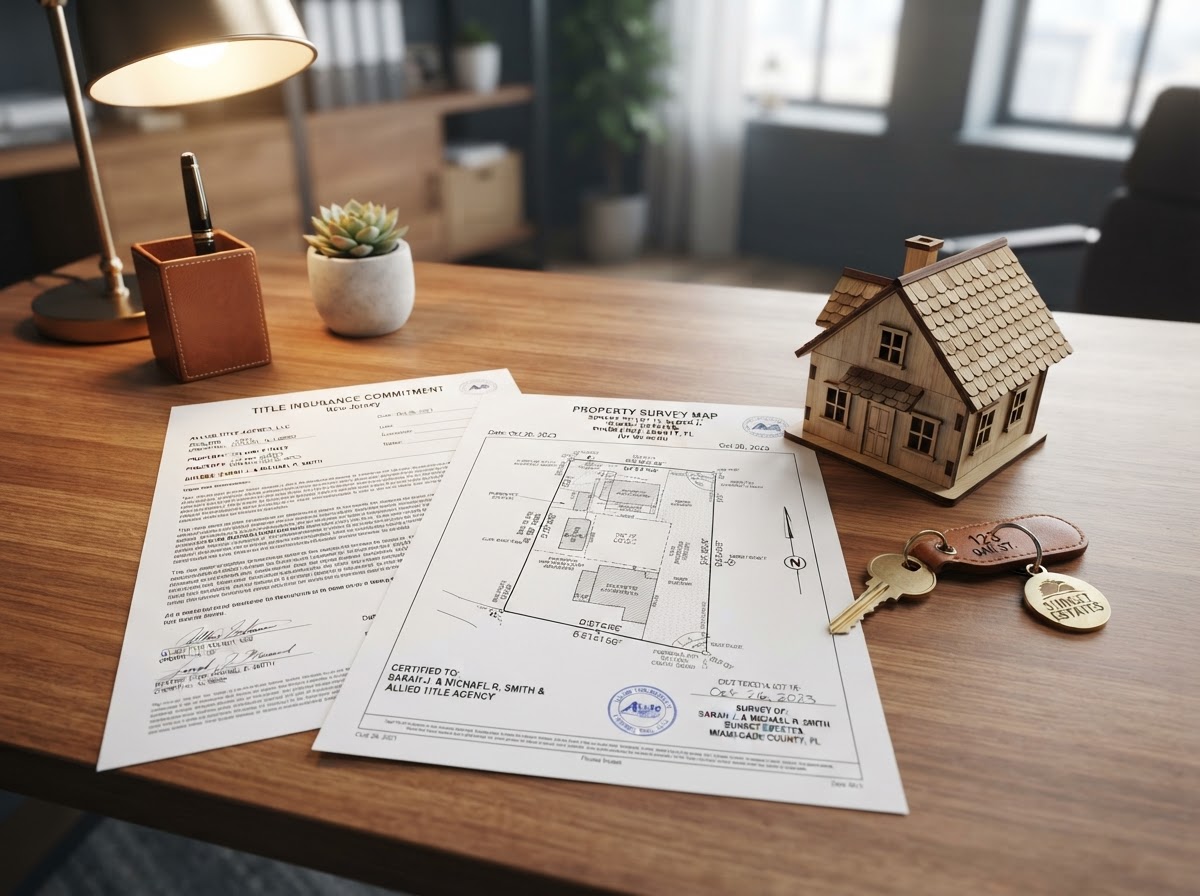
When you buy a home, you are not just buying the building — you are buying the legal right to own it. Title insurance and a property survey are the tools that confirm and protect that right. They are one-time costs at closing that can save you from expensive legal battles years later. Here is what every New Jersey and Florida buyer should understand.
What Title Insurance Protects Against
Title insurance covers defects in the chain of ownership that existed before your purchase but were not caught during the title search. Common covered issues include:
- Unpaid mortgages or liens from previous owners
- Tax liens, mechanic's liens, or judgment liens
- Forged deeds or fraudulent transfers
- Undisclosed heirs claiming ownership
- Recording errors or missing signatures
- Easements or restrictions not properly recorded
Unlike homeowners or auto insurance, which protect against future events, title insurance protects against past events. You pay one premium at closing and the coverage lasts as long as you or your heirs own the property.
Owner's vs. Lender's Title Policy
These are two separate policies that protect different parties:
- Lender's policy: Required by your mortgage company. Protects the lender's lien up to the loan amount. It does not protect you.
- Owner's policy: Optional but strongly recommended. Protects your equity up to the purchase price for as long as you own the home.
If a title defect surfaces, the lender's policy covers the bank and the owner's policy covers you. Skipping the owner's policy to save money is a risk — a single undiscovered lien or heir claim can cost far more than the premium.
The Title Search: What Happens Before Closing
Before issuing a policy, the title company examines public records to confirm the seller can transfer clear ownership. The search typically covers 40 to 60 years of records and looks for:
- Chain of title — confirming each transfer was valid
- Open mortgages and whether they are being paid off at closing
- Liens, judgments, and tax delinquencies
- Easements, rights-of-way, and deed restrictions
- Probate or bankruptcy filings affecting the property
Any defects must be cleared — or specifically insured over — before closing. Your home inspection covers the physical condition; the title search covers the legal condition. Both matter.
Why a Property Survey Matters
A survey confirms the property's boundaries and shows where structures, fences, driveways, and easements sit relative to the lot lines. It can reveal:
- Encroachments — a neighbor's fence or shed on your land (or yours on theirs)
- Setback violations that could affect future improvements
- Easements that limit where you can build
- Discrepancies between the deed description and the actual lot
Without a survey, your title policy may include a survey exception that excludes coverage for boundary disputes. That means if a neighbor later claims part of your yard, you have no title protection for it.
NJ vs FL: How Closings Differ
- New Jersey: Real estate attorneys handle closings. The attorney orders title and survey, clears defects, and conducts the closing. Surveys are commonly required. Title premiums are regulated.
- Florida: Title companies or attorneys handle closings. The party paying for the owner's policy usually chooses the title agent. A prior survey with a survey affidavit is often accepted to save cost, but a new survey is recommended for irregular lots or recent changes. Premiums are set by statute.
What to Check Before Closing
- Review the title commitment and ask about any listed exceptions
- Confirm whether a survey is being done and whether the survey exception is removed
- Make sure the owner's policy is being issued, not just the lender's
- Check that all required payoffs and lien releases are documented
- Ask about the simultaneous-issue discount when both policies are issued together
These costs are part of your closing costs. Review our NJ buyer closing costs and FL buyer closing costs guides to see the full picture.
Protecting Your Investment
Title insurance and a survey are small one-time costs that protect the largest purchase most people will ever make. If you are getting pre-approved or preparing to make a competitive offer, understanding these costs helps you budget accurately. For the full buyer journey, visit our buyer guides and financing resources.
Have questions about title, surveys, or closing in NJ or FL? Schedule a conversation with Christian.
Christian Tibok
REALTOR serving homeowners across New Jersey and Florida. Christian guides buyers through every closing cost and protection so there are no surprises at the table. Learn more about Christian.