
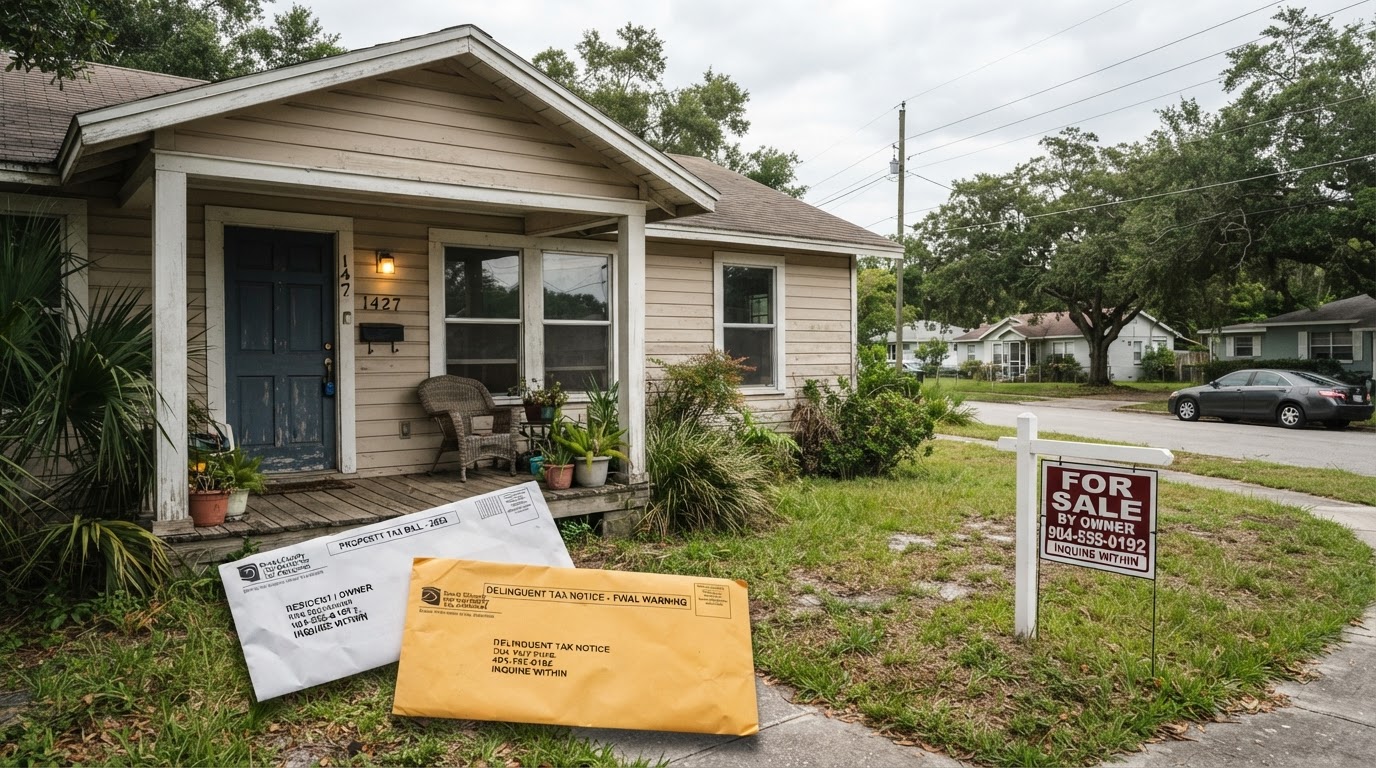
Property taxes are a priority lien — they sit ahead of almost every other claim on your home, including your mortgage. When you fall behind, both New Jersey and Florida have a structured tax sale process that can eventually strip your ownership. But you have time and options. Selling your home lets you satisfy the tax lien from your sale proceeds at closing and keep whatever equity remains.
How New Jersey Tax Sales Work
New Jersey sells tax sale certificates when property taxes go unpaid. Here is the process:
- Tax sale certificate: A third party (often an investor) pays your delinquent taxes at a municipal auction and receives a certificate.
- Interest accrues: The certificate earns interest — up to 18% per year — until you redeem it.
- Redemption period: You can redeem the certificate at any time by paying the full amount plus interest.
- Foreclosure: After two years, the certificate holder can foreclose on your property to take ownership. This is when you lose the home.
The clock starts the moment the certificate is sold. The longer you wait, the more interest piles on and the closer you get to foreclosure. Learn more about New Jersey property taxes.
How Florida Tax Sales Work
Florida uses a similar two-stage process:
- Tax certificate sale: The county sells a certificate to a buyer who pays the delinquent taxes. The certificate earns up to 18% interest per year.
- Tax deed sale: After two years, the certificate holder can apply for a tax deed sale — a public auction where your property can be sold to satisfy the lien.
- Redemption: You can redeem at any time before the tax deed sale by paying the taxes, interest, and costs.
How the Tax Lien Is Paid When You Sell
You do not need to pay the delinquent taxes out of pocket before selling. The unpaid taxes, penalties, and interest are paid from your sale proceeds at closing. The title company calculates the exact payoff amount and satisfies the lien so the buyer receives a clean title.
- The title company orders a tax certification from the municipality or county.
- The payoff amount (taxes + interest + fees) is deducted from your proceeds.
- The lien is released and the buyer gets clear title.
- You keep whatever equity remains after the lien, mortgage, and closing costs are paid.
Does a Tax Lien Block Financing?
A tax lien does not necessarily block a buyer's financing, but it must be satisfied at closing. Most lenders and title companies require a clean title before they will fund a loan. Because the lien is paid from your proceeds, a financed buyer can still purchase the home — the lender just insists the lien be cleared first. A cash buyer can close even faster since there is no lender timeline.
Your Selling Options
- Traditional sale: List the home, pay the lien from proceeds at closing. Works if you have enough equity to cover the taxes, mortgage, and costs. Get a home value estimate first.
- Cash offer as-is: The fastest path when you are up against a tax sale deadline. Close in 7–14 days, pay the lien from proceeds, and walk away with your equity. See cash offer options.
- Redeem and keep: If you have the cash to pay the taxes plus interest and want to keep the home, redeem the certificate directly with the municipality or county.
Compare your paths with our options comparison.
Act Before the Foreclosure Deadline
The most important thing is timing. Interest accrues daily, and after the statutory waiting period, a certificate holder can foreclose and take your property — even if you have significant equity. Selling now lets you satisfy the lien and preserve your remaining equity before it is consumed by penalties or lost entirely.
If you are also facing mortgage default, read about stopping foreclosure in NJ or FL and pre-foreclosure options.
Take the Next Step
Do not wait for the tax sale deadline. Start with a home value estimate or schedule a confidential conversation with Christian to understand your payoff, your equity, and your fastest path forward.
Related Reading for NJ and FL Homeowners
For more, read about selling a house with a lien, NJ vs FL property taxes, or selling a house underwater.

Christian Tibok
REALTOR serving homeowners across New Jersey and Florida. Christian helps homeowners facing tax sales and liens understand their payoff, protect their equity, and choose the fastest path forward. Learn more about Christian.