
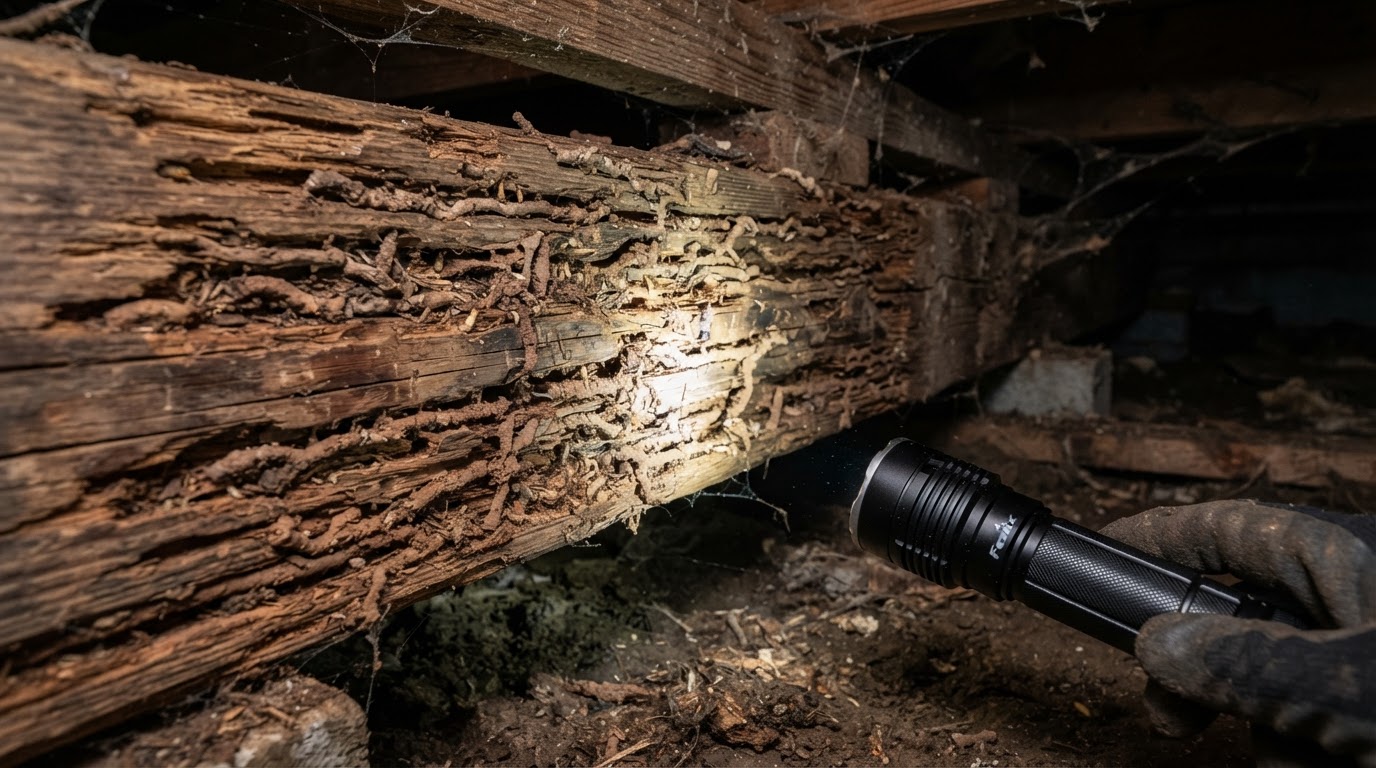
Termite and wood-destroying insect (WDI) damage is one of the most common condition issues in both New Jersey and Florida homes. Subterranean termites are widespread in both states, and Florida also contends with aggressive Formosan termites. The good news: you can sell a home with termite damage. The path you choose depends on the severity, your budget, and your timeline.
How Termite Damage Affects a Sale
Termite damage affects a sale in three ways: disclosure, financing, and buyer confidence.
- Disclosure: Both NJ and FL require you to disclose known termite infestation and damage. Buyers also order a WDI inspection, so the damage will be discovered regardless.
- Financing: FHA, VA, and USDA appraisers and lenders may require treatment and structural repairs before closing if damage is significant. Conventional lenders may also condition the loan on repairs.
- Buyer confidence: Documented treatment and repairs with warranties reassure buyers. Untreated, visible damage triggers steep price negotiations or walk-aways.
Disclosure Requirements in NJ and FL
Both states require sellers to disclose known termite or WDI infestation and damage.
- Florida: The seller disclosure form asks directly about termites, wood-destroying organisms, and prior treatments. Answer honestly and completely.
- New Jersey: Sellers must disclose known material defects, which includes termite damage and infestation.
- Provide treatment records, warranties, and repair documentation if work was done.
Because buyers almost always order a WDI inspection, concealing damage is futile and risky. Honest disclosure builds trust and attracts buyers prepared for the condition. For more on disclosure, read about selling with code violations.
Treatment and Repair Costs
Costs vary based on the treatment method, home size, and extent of structural damage.
- Treatment: A professional liquid barrier or bait system treatment typically runs $500 to $2,500 depending on home size and method.
- Minor repair: Replacing a damaged joist, sill plate, or trim may cost $1,000 to $5,000.
- Extensive structural repair: Multiple load-bearing members, framing, or subfloor replacement can exceed $10,000.
- Ongoing prevention (FL): Bait stations and annual inspections are standard in Florida due to aggressive termite species.
Get at least two estimates from licensed pest control and repair contractors before deciding.
Repair First or Sell As-Is?
The right choice depends on the damage severity, your budget, and your timeline.
- Treat and repair first if: The damage is minor to moderate, you can afford the work, and you want the widest buyer pool and highest net price. Keep all warranties and permits.
- Sell as-is if: The damage is extensive, you cannot afford repairs, or you need to move quickly. A cash offer avoids repair costs, financing contingencies, and WDI inspection delays.
Compare both paths with our options comparison to see which nets you more.
Pricing a Home With Termite Damage
Buyers and appraisers discount a home with untreated termite damage by the estimated treatment and repair cost plus a risk premium.
- Get treatment and repair estimates from licensed contractors.
- Start with a home value estimate for the home in sound condition.
- Subtract the treatment and repair cost plus a 10%–20% risk premium for buyer uncertainty.
- Price at or slightly below that number to attract serious buyers.
For more on pricing condition-challenged homes, read about selling a house that needs repairs.
Your Selling Options
- Treat, repair, and list: Highest net if the damage is manageable and you can wait. Document everything.
- Renovate & sell: We fund treatment and repairs upfront and list for top value. See Renovate & Sell.
- Cash offer as-is: The simplest path for extensive damage. No treatment, no repairs, no financing contingencies. See cash offer options.
Take the Next Step
Termite damage is common and solvable. Start with a home value estimate or schedule a conversation with Christian to compare your treatment, repair, and as-is options honestly.
Related Reading for NJ and FL Sellers
For more, read about selling with foundation problems, selling with mold or water damage, or selling a house as-is in Florida.

Christian Tibok
REALTOR serving homeowners across New Jersey and Florida. Christian helps sellers with termite and condition challenges compare treatment, repair, and as-is options to protect their equity. Learn more about Christian.