
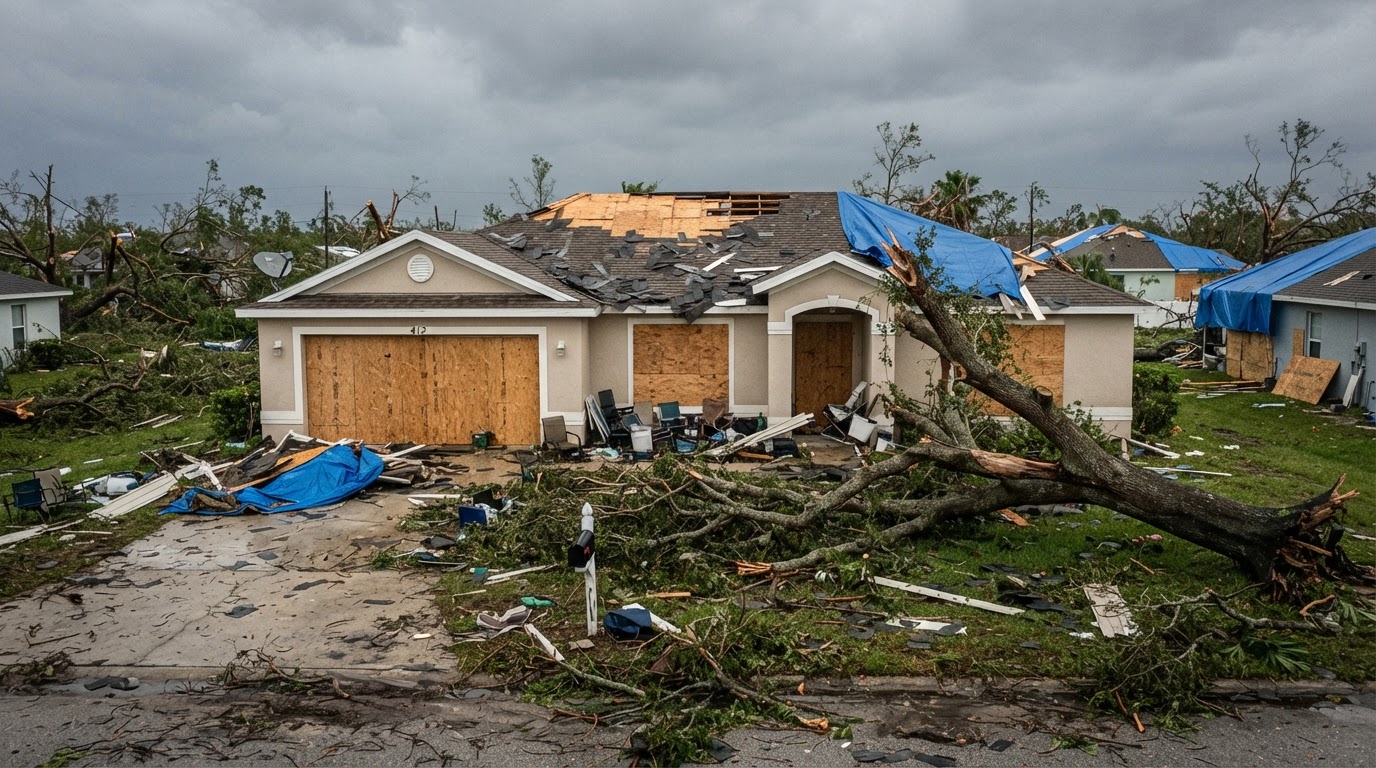
Florida homeowners live with the reality of hurricanes. When a storm damages your home, you may face roof loss, water intrusion, mold, and an insurance claim that drags on for months. Selling a hurricane-damaged home is absolutely possible — but the path you choose depends on the extent of the damage, your insurance outcome, your equity, and how quickly you need to move.
How Hurricane Damage Affects a Sale
Storm damage hits a sale in three places: financing, insurance, and buyer confidence. Understanding each helps you choose the right strategy.
- Financing: FHA, VA, and conventional lenders will not approve a loan on a home with major structural damage, a compromised roof, or active water intrusion. The appraisal will flag the defects and the loan will stall.
- Insurance: A damaged home may be uninsurable until repairs are complete, and in Florida, a home that cannot be insured usually cannot be financed. Learn more about Florida insurance and wind mitigation.
- Buyer confidence: Even cash buyers discount heavily for uncertainty. Documented repairs and a resolved claim reduce the risk premium.
Your Insurance Claim: Resolve It Before Listing
If you have a valid policy, file your claim immediately after the storm. Document everything with photos and video. Most Florida policies cover wind and storm damage, subject to a separate hurricane deductible — typically 2% to 5% of your dwelling coverage, which can be a significant out-of-pocket amount.
- File early: Insurers process claims in the order received. After a major storm, delays stretch into months.
- Keep all documentation: Photos, adjuster reports, estimates, and correspondence should be organized for the buyer.
- Watch assignment of benefits (AOB): Signing an AOB lets a contractor pursue your claim directly. It can speed repairs but complicates a sale because the buyer inherits the arrangement.
- If denied or underpaid: You can still sell as-is. A cash buyer purchases the home in its damaged state and handles repairs themselves.
Disclosure Requirements in Florida
Florida requires sellers to disclose known material defects, and hurricane damage is material. The seller disclosure form asks directly about prior insurance claims, roof damage, and water intrusion.
- Disclose all storm damage, repairs (or lack thereof), and any open insurance claim.
- Provide repair receipts, permits, and contractor warranties if work was done.
- Hiding storm damage can lead to liability after closing — honesty protects you and attracts prepared buyers.
Repair First or Sell As-Is?
The right choice depends on the damage severity, your insurance payout, and your timeline.
- Repair first if: The damage is moderate, your insurance covers most of the cost, and you can wait for repairs and permits. A repaired home with documentation sells for the highest price and widest buyer pool.
- Sell as-is if: The damage is severe, your claim is denied or underpaid, or you cannot wait months for repairs. A cash offer lets you close quickly without repairs, permits, or financing contingencies.
Compare both paths with our options comparison to see which nets you more.
Pricing a Hurricane-Damaged Home
Buyers and appraisers discount a damaged home by the estimated repair cost plus a risk premium for uncertainty and carrying costs.
- Get at least two contractor estimates for full repairs.
- Start with a home value estimate for the home in repaired condition.
- Subtract the repair cost (minus any insurance payout you keep) and a 15%–30% risk premium.
- Price at or slightly below that number to attract serious buyers.
Your Selling Options
- Repair and list: Highest net if you have the time and insurance coverage. Keep all permits and warranties.
- Renovate & sell: We fund the repairs upfront and list for top value. See Renovate & Sell.
- Cash offer as-is: The fastest, simplest path for severe damage or denied claims. No repairs, no financing, no insurance dependency. See cash offer options.
Take the Next Step
Hurricane damage is stressful, but you have options. Start with a home value estimate or schedule a conversation with Christian to compare your repair and as-is options honestly.
Related Reading for Florida Sellers
For more, read about selling with mold or water damage, selling with a damaged roof, or selling a house as-is in Florida.

Christian Tibok
REALTOR serving homeowners across New Jersey and Florida. Christian helps storm-affected sellers navigate insurance claims, repair decisions, and as-is cash options to protect their equity. Learn more about Christian.