
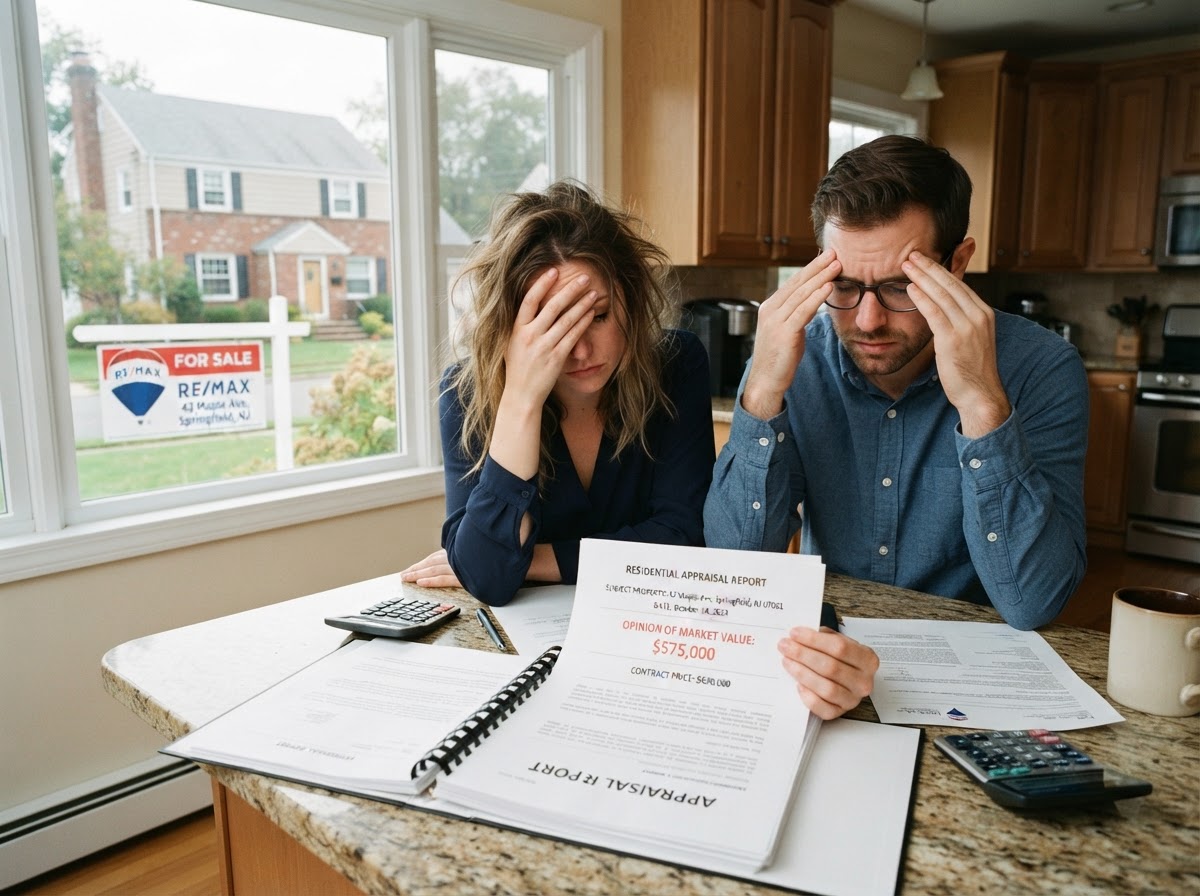
If you are financing your purchase, your lender will order an appraisal to confirm the home is worth what you agreed to pay. When the appraisal comes in at or above the contract price, you proceed normally. When it comes in low, the loan is recalculated against the appraised value — and a gap opens between what the lender will finance and what you agreed to pay. Here is how to handle it.
Why Appraisals Come In Low
- Rising prices: In a fast-appreciating market, closed comparable sales lag behind current list prices.
- Few comps: Rural or unique homes have fewer comparable sales, making valuation harder.
- Overpayment: In a bidding war, buyers sometimes push past what the data supports.
- Condition issues: The appraiser notes defects that reduce value relative to the comps.
- Appraiser errors: Wrong square footage, missed upgrades, or distant comparables can skew the value.
The Four Options
- Renegotiate the price: Ask the seller to reduce to the appraised value or meet you in the middle. A low appraisal is strong leverage because the seller knows other financed buyers will face the same gap.
- Cover the gap in cash: Bring extra cash to closing to make up the difference. Only do this if the home is worth it to you and you have the reserves.
- Challenge the appraisal: Submit a reconsideration of value with better comparable sales or evidence of errors.
- Walk away: If you kept the appraisal contingency and the seller will not renegotiate, you can terminate and recover your earnest money.
Renegotiating After a Low Appraisal
Sellers often accept a price reduction after a low appraisal because the same appraisal will likely follow the next financed buyer. Your agent should present the appraisal findings and comparable sales professionally. Common outcomes:
- Seller reduces the price to the appraised value.
- Buyer and seller split the difference.
- Seller offers a closing credit instead of a price cut.
- Seller refuses — and the buyer walks or covers the gap.
Challenging the Appraisal
You can request a reconsideration of value (ROV) through your lender. To succeed, you need evidence:
- Better comparable sales — closed within 90 days, within a half-mile, similar size and condition.
- Evidence of upgrades or features the appraiser missed (renovated kitchen, new roof, finished basement).
- Factual errors — wrong square footage, incorrect lot size, missed bedrooms or bathrooms.
Challenges work best when the original appraisal used outdated or distant comparables. Your agent should pull the comps and build the case.
Covering the Gap: When It Makes Sense
Paying the gap in cash makes sense when you plan to hold the home long-term, the comparable sales support a higher value over time, or you are in a rapidly appreciating market. It is risky if you are stretching your budget, the gap is large, or the comps genuinely suggest you overpaid. Get your agent's honest opinion before committing — and never cover a gap you cannot afford.
If You Waived the Appraisal Contingency
If you waived the appraisal contingency to win a bidding war, you committed to covering any gap in cash. If you cannot, you are in default — which can cost you your earnest money and expose you to legal action. This is why waiving the appraisal contingency should only happen with strong comparable sales evidence and sufficient cash reserves. Learn how to structure a strong offer in our competitive offer guide.
Take the Next Step
A low appraisal is a hurdle, not a dead end. Get pre-approved, find a home, or schedule a conversation with Christian to build an appraisal-gap strategy before you make an offer in NJ or FL.
Related Reading for NJ and FL Buyers
For more, read about making a competitive offer, earnest money deposits, or home inspections for buyers.

Christian Tibok
REALTOR serving buyers across New Jersey and Florida. Christian helps buyers navigate low appraisals with smart renegotiation and gap strategies. Learn more about Christian.