
Full Circle Real Estate, Christian TibokFull Circle Real Estate
    NJFL
    Buying

    Earnest Money Deposit in NJ or FL

    Earnest money is the good-faith deposit that shows a seller you are serious about buying their home. It is one of the first checks you will write after your offer is accepted — and one of the most misunderstood parts of the process. Here is exactly how it works in New Jersey and Florida.

    Christian Tibok Sep 21, 2026 7 min read
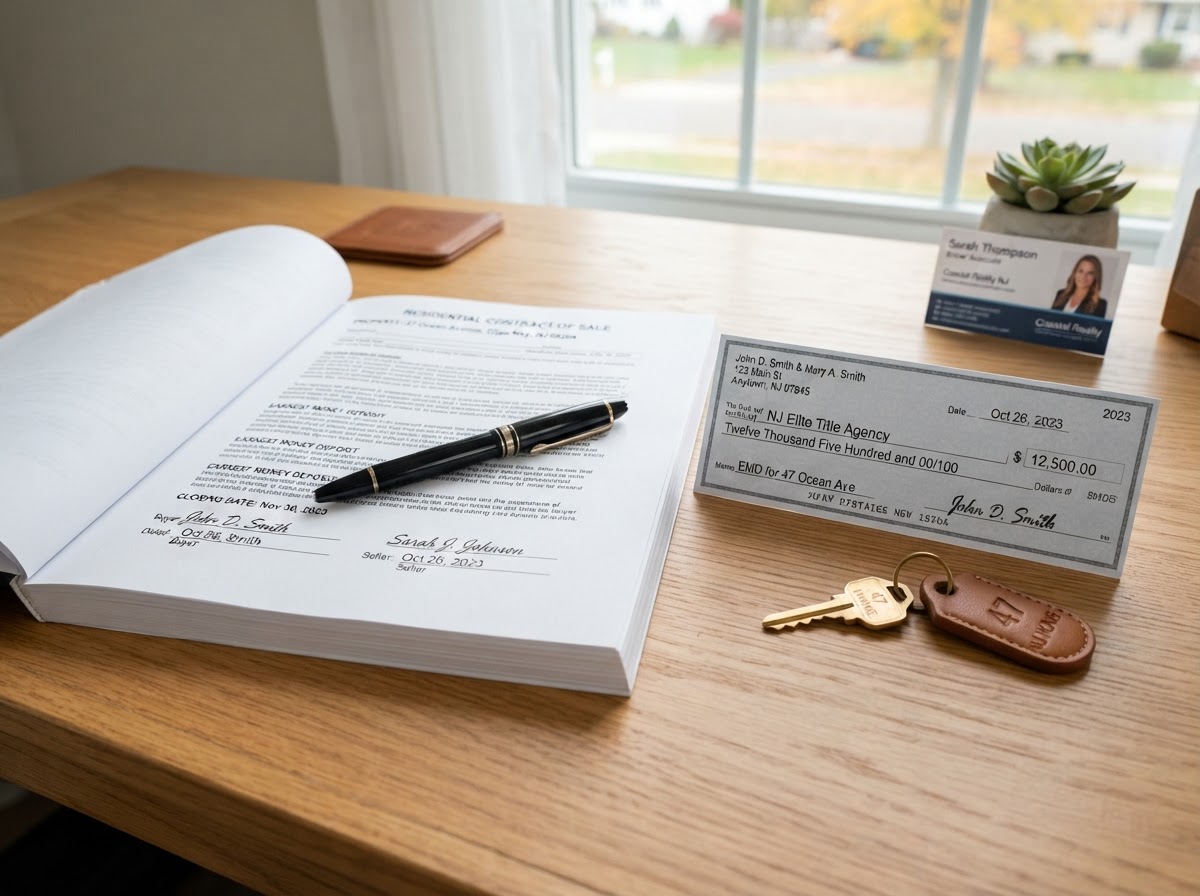
    Earnest money deposit check and real estate contract paperwork with a house key on a desk, representing a home purchase in NJ or FL

    When your offer is accepted, you do not immediately hand the seller a check for the full purchase price. Instead, you deposit a smaller good-faith amount — earnest money — into an escrow account. That deposit secures your commitment while you complete your inspections, appraisal, and financing. At closing, it is credited toward your purchase. If the deal collapses for a covered reason, you usually get it back.

    How Much Earnest Money Do You Need?

    • Standard range: 1% to 3% of the purchase price in NJ and FL.
    • Typical deposit: 1% to 2% in a normal market.
    • Competitive offer: 2% to 3% to signal seriousness.
    • Example: On a $400,000 home, expect $4,000 to $12,000.

    The deposit is credited toward your down payment or closing costs at closing — it is not an extra cost. A larger deposit can strengthen your offer; learn more in our guide to making a competitive offer.

    When Is It Due?

    The exact deadline is in your purchase contract. Common timelines:

    • Within 3 to 5 business days of offer acceptance (most common).
    • Within 48 hours in faster transactions.
    • At offer submission in highly competitive markets.

    Deliver the deposit on time. A late deposit can be a contract breach and give the seller grounds to cancel and move to a backup offer.

    Who Holds the Deposit?

    The deposit goes into a neutral escrow trust account — never directly to the seller. In New Jersey, it is typically held by the real estate brokerage or the title company. In Florida, it is often held by the title company or closing agent. The funds stay escrowed until closing or until the parties agree in writing to release them.

    When Is Earnest Money Refundable?

    Your refundability depends on your contingencies and whether you exit within their deadlines:

    • Inspection contingency: If you terminate within the inspection window for a covered defect, the deposit is refunded. See our home inspection guide.
    • Financing contingency: If your loan is denied through no fault of your own within the contingency period, the deposit is refunded.
    • Appraisal contingency: If the home appraises below the contract price and you terminate under the contingency, the deposit is refunded. Read about low appraisals.
    • Waived contingencies or missed deadlines: If you waived the contingencies or let the deadlines pass and then default, the seller may keep the deposit.

    What Happens at Closing?

    At closing, your earnest money is applied as a credit toward your down payment and closing costs. If you owe $40,000 at closing and deposited $8,000 in earnest money, you bring $32,000 to the table. The deposit reduces your closing-day cash — it does not vanish.

    What If There Is a Dispute?

    If the deal collapses and the parties disagree over the deposit, the escrow agent cannot unilaterally release the funds. In New Jersey, disputed funds are held until the parties mediate, arbitrate, or obtain a court order. In Florida, the escrow agent may follow a statutory procedure or interplead the funds into court. Clear contingency deadlines and written termination notices prevent these disputes.

    Take the Next Step

    Understanding earnest money protects your cash and your deal. Get pre-approved, find a home, or schedule a conversation with Christian about your deposit and contingency strategy in NJ or FL.

    Related Reading for NJ and FL Buyers

    For more, read about making a competitive offer, buyer closing costs, or how to buy a house in NJ.

    Christian Tibok, REALTOR serving NJ and FL

    Christian Tibok

    REALTOR serving buyers across New Jersey and Florida. Christian helps buyers protect their earnest money with clear contingency strategies. Learn more about Christian.

    Common Questions About Earnest Money Deposits

    How much earnest money do I need in NJ or FL?

    Earnest money in New Jersey and Florida typically runs 1% to 3% of the purchase price. In a standard sale, 1% to 2% is common; in a competitive multiple-offer situation, 2% to 3% signals seriousness. On a $400,000 home, that is $4,000 to $12,000. The deposit is credited toward your down payment or closing costs at closing — it is not an additional cost on top of the purchase price.

    Is earnest money refundable if the deal falls through?

    It depends on why the deal collapses. If you terminate within a valid contingency window (inspection, financing, or appraisal), your earnest money is typically refunded in full. If you waive those contingencies and then default — for example, you simply change your mind, or your financing falls through after the contingency expired — the seller may keep the deposit. Read your contract's contingency deadlines carefully, because missing a deadline can convert a refundable exit into a forfeited deposit.

    Who holds the earnest money deposit?

    The deposit is held in an escrow account by a neutral third party — usually the listing broker's, buyer's broker's, or title company's trust account — not by the seller directly. In New Jersey, earnest money is commonly held by the real estate brokerage or the title company. In Florida, it is often held by the title company or closing agent. The funds remain escrowed until closing or until the parties agree in writing to release them.

    When is the earnest money due?

    Typically within 3 to 5 business days of the seller accepting your offer, though some contracts require it within 48 hours or even at offer submission in hot markets. The exact deadline is stated in your purchase contract. Deliver it on time — a late deposit can be a breach of contract and give the seller grounds to cancel.

    What happens to earnest money at closing?

    At closing, your earnest money deposit is applied as a credit toward your down payment and closing costs. For example, if you owe $40,000 in down payment and closing costs and you deposited $8,000 in earnest money, you bring $32,000 to the closing table. The deposit reduces the cash you need to bring on closing day — it does not disappear.

    What if the seller and buyer disagree about who gets the deposit?

    If a deal collapses and the parties disagree over the deposit, the escrow agent cannot simply pick a side. In New Jersey, disputed funds may be held until the parties mediate, arbitrate, or obtain a court order. In Florida, the escrow agent can follow a statutory procedure or interplead the funds into court. This is why clear contingency deadlines and written termination notices matter — they prevent disputes over who is entitled to the money.

    NJ908-332-8618FL561-475-3905Options