
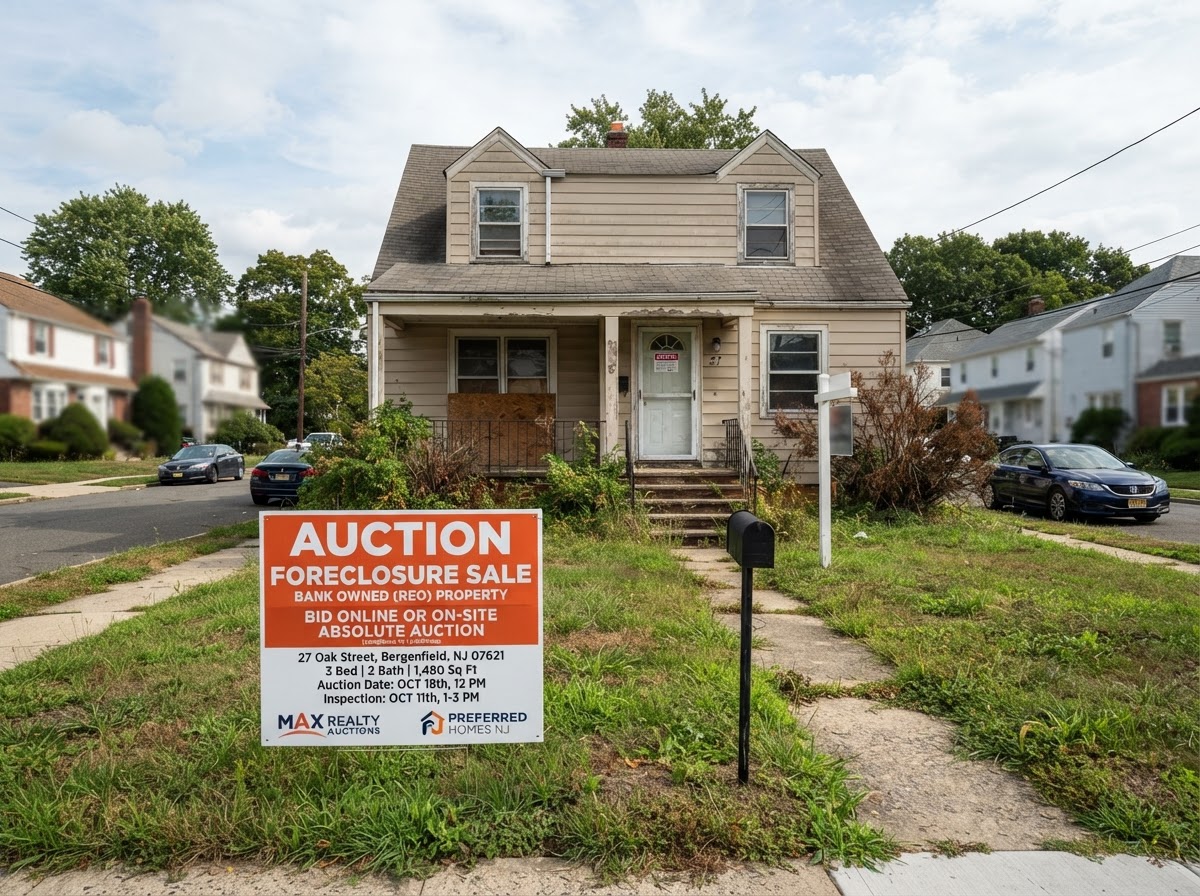
Buying a distressed property — a short sale, a foreclosure auction, or a bank-owned (REO) home — can be a path to value, but each comes with a different process and risk profile. Understanding the differences helps you choose the right approach for your budget, timeline, and risk tolerance.
Short Sale vs. Foreclosure vs. REO
- Short sale: The homeowner sells before foreclosure with lender approval for less than owed. Slower, financing-dependent. Read our short sale buying guide.
- Foreclosure auction: The lender sells the property at a public auction after completing the judicial foreclosure process. Cash buyers, no inspections, high risk.
- REO (real estate owned): The bank owns the property after it did not sell at auction. Listed on the MLS, viewable, inspectable, and financeable like a standard sale.
Buying at a Foreclosure Auction
Both New Jersey and Florida are judicial foreclosure states, meaning the process goes through the courts and ends with a public auction (sheriff's sale in NJ, foreclosure sale in FL). Auction buying is high-risk:
- Typically requires all-cash or certified funds.
- No opportunity to inspect the interior beforehand.
- You may inherit liens, code violations, or occupants.
- No financing or inspection contingencies.
Auction buying is best for experienced investors, not typical home buyers. For most buyers, an REO is the safer path to a distressed-property deal.
Buying an REO (Bank-Owned) Home
REOs are listed on the MLS like any other home, represented by a listing agent working for the bank. The process is more like a standard purchase:
- You can view and inspect the property.
- You can finance it with a mortgage if it meets condition standards.
- The bank sells it as-is and usually will not make repairs.
- You can negotiate price based on inspection findings.
An experienced buyer's agent is essential to navigate bank addenda and as-is terms.
Are Foreclosures and REOs a Good Deal?
They can be, but not always the deep discount many expect. REOs are typically priced at market value minus needed repairs. The real value is in buying a home that needs work and building equity through improvements. Always compare the all-in cost (price plus repairs) to comparable move-in-ready homes. Get a professional inspection and a repair estimate before committing.
Financing an REO
If the REO is in livable condition, you can finance it with conventional, FHA, or VA loans. If it needs significant repairs, consider a renovation loan:
- FHA 203k: Finances purchase and repairs in one loan. Read our 203k guide.
- Conventional HomeStyle: Similar renovation financing for conventional buyers.
Start with pre-approval so you can act quickly when the right property appears.
Risks to Understand
- As-is condition with no seller repairs.
- Hidden damage, mold, or structural issues.
- Possible liens or code violations requiring a title search.
- Occupants who may need formal eviction.
- Limited disclosure since the bank has never lived in the home.
Take the Next Step
Distressed properties can be a smart buy with the right guidance. Schedule a conversation with Christian, who is experienced with distressed-property transactions in both NJ and FL.
Related Reading
For more, read about buying a short sale, FHA 203k renovation loans, or stopping foreclosure.

Christian Tibok
REALTOR licensed in New Jersey and Florida. Christian helps buyers and investors evaluate distressed properties, REOs, and renovation opportunities across both states. Learn more about Christian.