
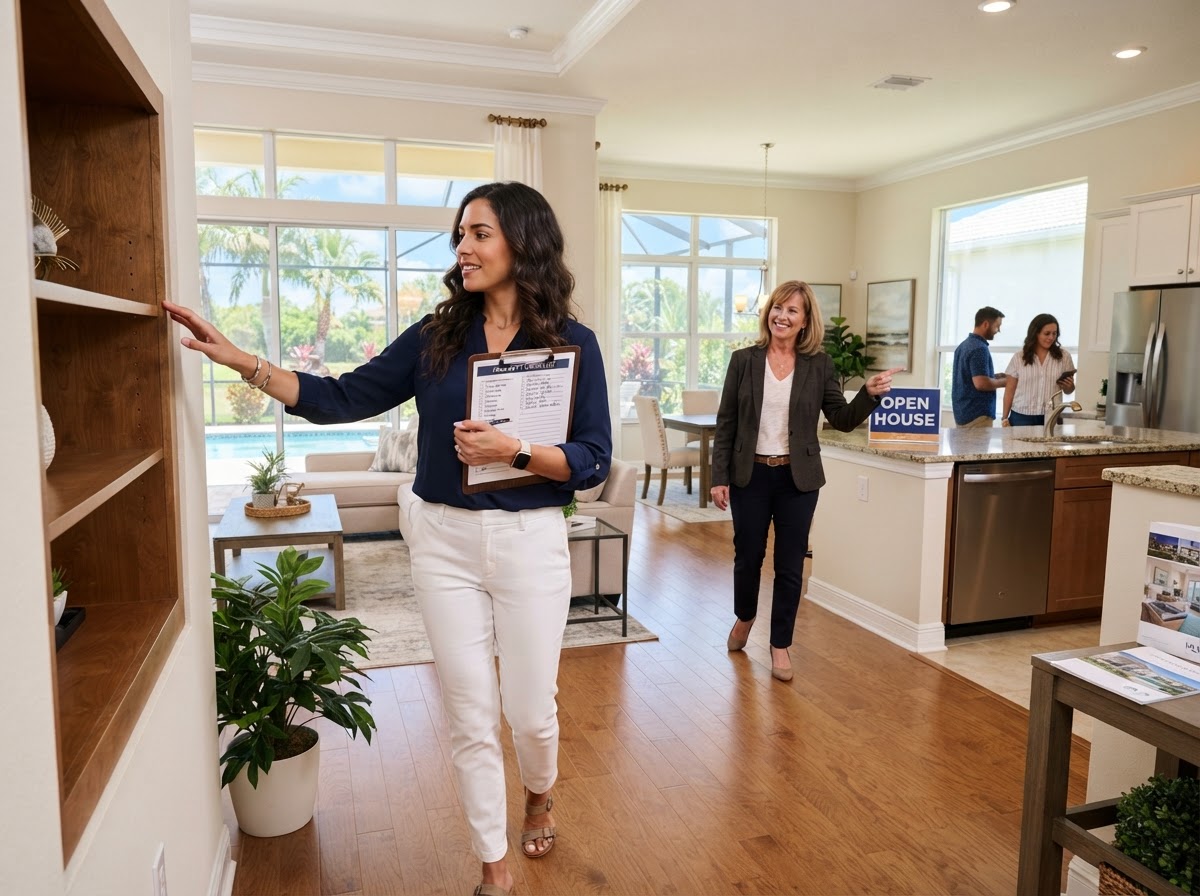
Online photos are marketing. The showing is your chance to verify reality. Walk through with a checklist, take your time, and look past the fresh paint and pleasant lighting. The goal is not to inspect every system — that is the inspector's job — but to filter out homes with obvious problems before you spend money on an offer and an inspection.
What to Bring
- A printed or phone-based checklist.
- A phone for photos and video.
- A tape measure for rooms and furniture fit.
- A small flashlight for closets, basements, and attics.
- An outlet tester (small, inexpensive) to check wiring.
- Your buyer's agent — always.
The Exterior Checklist
- Roof: Look for missing, curling, or patched shingles. Note the apparent age.
- Foundation: Walk the perimeter and look for horizontal or stair-step cracks, especially in NJ homes.
- Grading: Does the ground slope away from the foundation? Poor grading causes water intrusion.
- Gutters and downspouts: Are they intact and directed away from the house?
- Siding and trim: Look for rot, peeling paint, or signs of deferred maintenance.
- Florida specifics: Check for storm shutters, screen enclosure condition, and signs of past storm damage.
The Interior Checklist
- Water stains: Check ceilings, around windows, and under sinks. Fresh paint can hide old leaks.
- Plumbing: Test faucets, flush toilets, and note water pressure and drain speed.
- Odors: Musty smells suggest mold or water intrusion, even if you cannot see it.
- HVAC: Note the unit's age and brand; ask when it was last serviced.
- Electrical: Look at the panel — outdated brands like Federal Pacific or Zinsco are common in older NJ homes and are a safety concern.
- Windows and doors: Open and close them; sticky frames can signal foundation movement.
- Floors: Look for sloping, squeaks, or uneven transitions.
Red Flags That Warrant Caution
- Large horizontal or stair-step foundation cracks.
- Active water intrusion or standing water in a basement or crawl space.
- A sagging roof or multiple patched areas.
- Strong musty or mold odors.
- Evidence of termite tunnels or hollow-sounding wood.
- Outdated or recalled electrical panels.
- In Florida, a history of insurance claims for water or storm damage — learn about Florida insurance and wind mitigation.
None of these are automatic deal-killers, but each warrants a professional inspection and possibly a specialist evaluation before you make an offer.
How Many Homes Should You Tour?
Most serious buyers tour 5 to 15 homes before making an offer. Touring too few risks overpaying or missing red flags; touring too many causes decision fatigue. Define your must-haves and deal-breakers first, tour in focused batches, and move quickly when a home meets your criteria. Start by finding a home that fits your budget.
Always Bring Your Agent
In NJ and FL, your buyer's agent represents you, not the seller. If you walk into an open house or contact the listing agent directly, that agent may represent the seller — and anything you say can be used against you in negotiations. Always have your agent schedule and attend showings so you have professional representation from the first visit.
Take the Next Step
A good showing checklist filters out problem homes before you spend money on an inspection. Get pre-approved, find a home, or schedule a conversation with Christian to set up a showing strategy in NJ or FL.
Related Reading for NJ and FL Buyers
For more, read about home inspections for buyers, making a competitive offer, or how to buy a house in Florida. You can also browse upcoming open houses or review our buyer guides.

Christian Tibok
REALTOR serving buyers across New Jersey and Florida. Christian helps buyers tour smart, spot red flags, and make confident offers. Learn more about Christian.